Kabarak Call to Peace and Ecojustice

kabarak

The Kabarak Call for Peace and Ecojustice  was approved on 24 April 2012 at the Sixth World Conference Friends, held at Kabarak University near Nakuru, Kenya. It is the culmination of the FWCC World Consultation on Global Change which was held in 2010 and 2011. It is being circulated with the Conference Epistle.

Read the full document by clicking the link below.

Kabarak Call for Peace and Ecojustice

Quaker statement on climate change

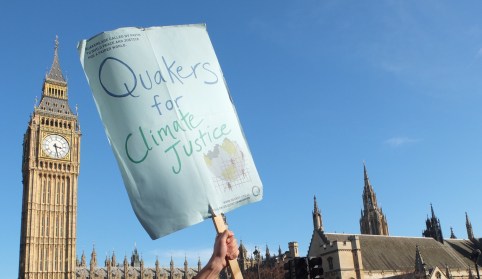
Q.s for climate justice ed.

A “Quaker Statement on Climate Change” has been signed by a large number of Quaker organizations, having been distributed to all Yearly Meetings across the world. The Statement recognizes the personal and collective responsibility to respond to anthropogenic climate change and calls for fair, sufficient and effective international action.

Read the document here: Quaker Statement on Climate Change – March 2016

Ireland Yearly Meeting and Sustainability

respondingIYM

The following extract is from the document Responding to IYM 2016: Living sustainably and fairly on this earth, a booklet put together to help Meetings develop sustainability plans.

The full text is accessible below.

Responding to IYM 2016 final pdf for web

The 2016 FWCC World Quaker Gathering in Peru called on Yearly Meetings around the world to initiate at least two concrete actions on sustainability by January 2017. Ireland Yearly Meeting responded by agreeing to the following two actions:

  1. To commit to making all the Meetings within Ireland Yearly Meeting as sustainable as possible, considering such factors as accessibility by public transport, energy efficiency, use of Fairtrade tea and coffee and use of organic and locally sourced food when possible. We ask Meetings to develop a sustainability plan, no matter how simple, before January 2017. We ask IYM to take its sustainability plan into consideration when planning for its next Yearly Meeting.
  2. To follow in the steps of FWCC by developing an investment strategy, by January 2017, to ethically invest all the funds within the Yearly Meeting in sustainable and peaceful companies, and divest from destructive industries, including fossil fuels.

Limits and Innovation

limitsandinnovation

The following text is from Quaker friend John Kintree’s piece, Limits and Innovation, published on globalreferendum2020.org.

For more information on the Global Citizens Database Project, which John is involved with, follow this link.

‘We live on a finite planet.  There are limits to the resources we can extract from the planet, and to the pollution we can release into it. Limits can be altered through innovation.  For instance, the number of bushels of corn that can be grown per acre has increased dramatically in the last 100 years. Still, there is an ultimate limit to the amount of corn that can be grown per acre because there is only so much sunlight per acre, and it is the energy from the sun that causes corn to grow.

Innovative technologies can sometimes be double-edged swords.  Industrial-chemical agriculture is one of the largest sources of greenhouse gas emissions.  The increase in crop production in some locations has required massive amounts of irrigation, which is causing water tables to fall.  What will happen to food production in those areas when the wells run dry?

Continue reading “Limits and Innovation”

Transforming Impasse: the way through conflict with Quaker listening processes

transformingimpasse

People have difficulty engaging with climate change for many reasons, including its scale and scientific and human complexity.

If society is to respond effectively to climate change and emerging resource crises, we will need to:

  1. Develop a shared understanding of our complex situation;
  2. Engage people emotionally – with compassion for those who will suffer even if they are far away, belong to different cultures or are not yet born; and
  3. Develop a collective will for change, especially in consumption.

It is in offering a different social model, of solidarity without an enemy, that Quakers may have most to offer.

Read the paper, published by the Quaker Council for European Affairs (QCEA), below:

TransformingImpasse

Minute 36 (The Canterbury Commitment)

minute36

Minute 36 challenges us, as Friends, to seek a sustainable, equitable and peaceful life on Earth. Britain Yearly Meeting is responding to this challenge by focusing on how to become a low-carbon sustainable community. The Quaker United Nations Office (QUNO) responds to the same challenge at the international level.

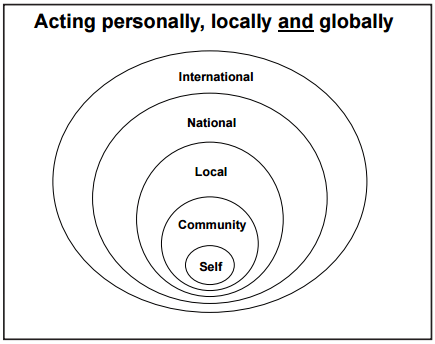
This briefing paper connects the work of QUNO to the concerns and the spirit of Minute 36, describing the linkages between local, national and international levels of engagement. QUNO seeks systemic change and provides a Quaker voice at the UN and related institutions.

Read the briefing paper by clicking the link.

QUNO Briefing Paper_Minute 36_FINAL copy

The importance of grassroots action to influence climate negotiations

actingpersonallyglobally

This paper, published as part of QUNO’s ‘Preparing for Paris’ series, proposes that the grassroots voice has an essential role in gaining progress at the international climate change negotiations, and with climate policy in general. This paper was co-written with Laurie Michaelis of Living Witness, a Quaker organisation supporting sustainable living.

Read the full document below:

QUNO Paper 2 Grassroots Influence – Preparation for Paris 2015

Call to Conscience

call2conscience

“A Call to Conscience: Quaker experiences facing the challenge of Climate Change” features interviews with Quakers worldwide on why they care about climate change, and what they are doing to address the challenge locally, nationally and internationally.

QUNO Call to Conscience

QUNO Geneva has created this publication as a form of witness in facing anthropogenic climate change through love and action, rather than fear. The people portrayed span our worldwide Quaker community, from Africa to Europe, Asia Pacific to the Americas.

Call to Conscience was originally published in September 2014. Read by clicking the link above.