A youth-led initiative founded by Quaker United Nations Summer School alumni, Youth Impacts Development and Environmental Change (YIDEC), has been working in Rwanda to address the challenges of climate change through education, environmental action, and youth empowerment.
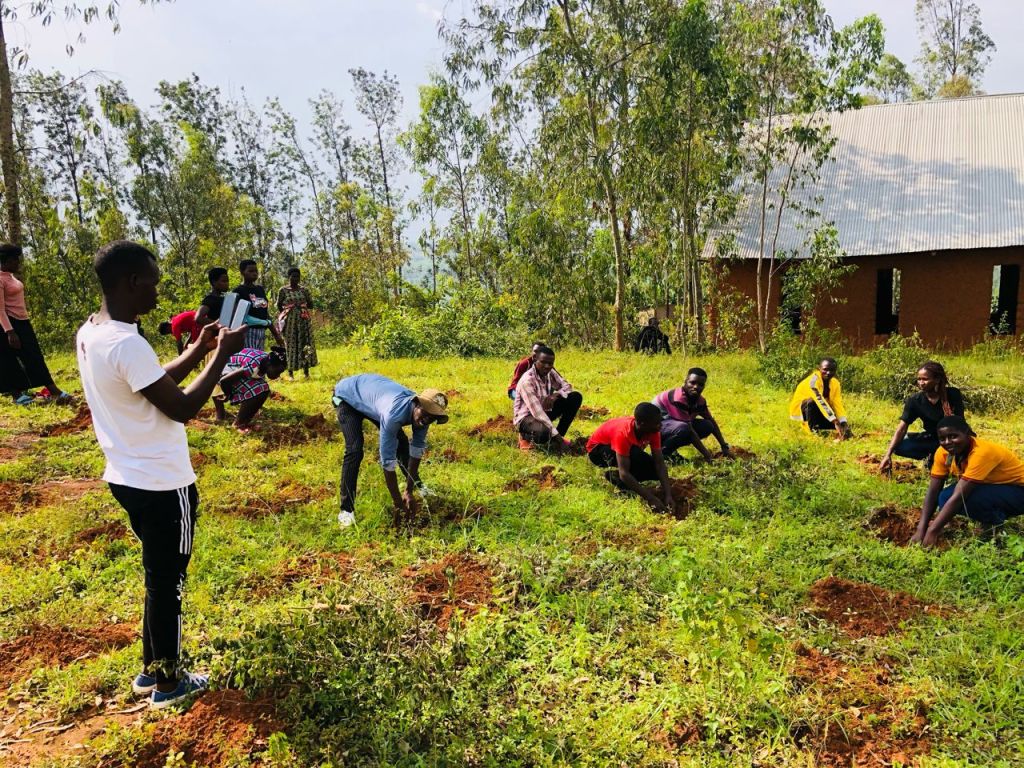
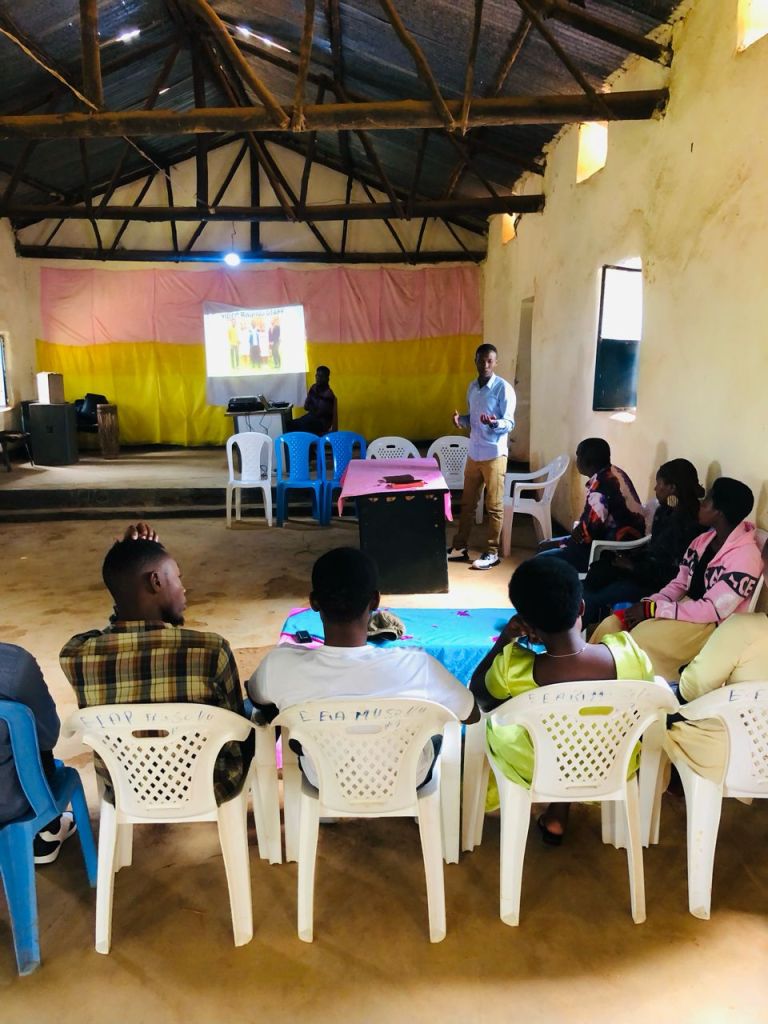
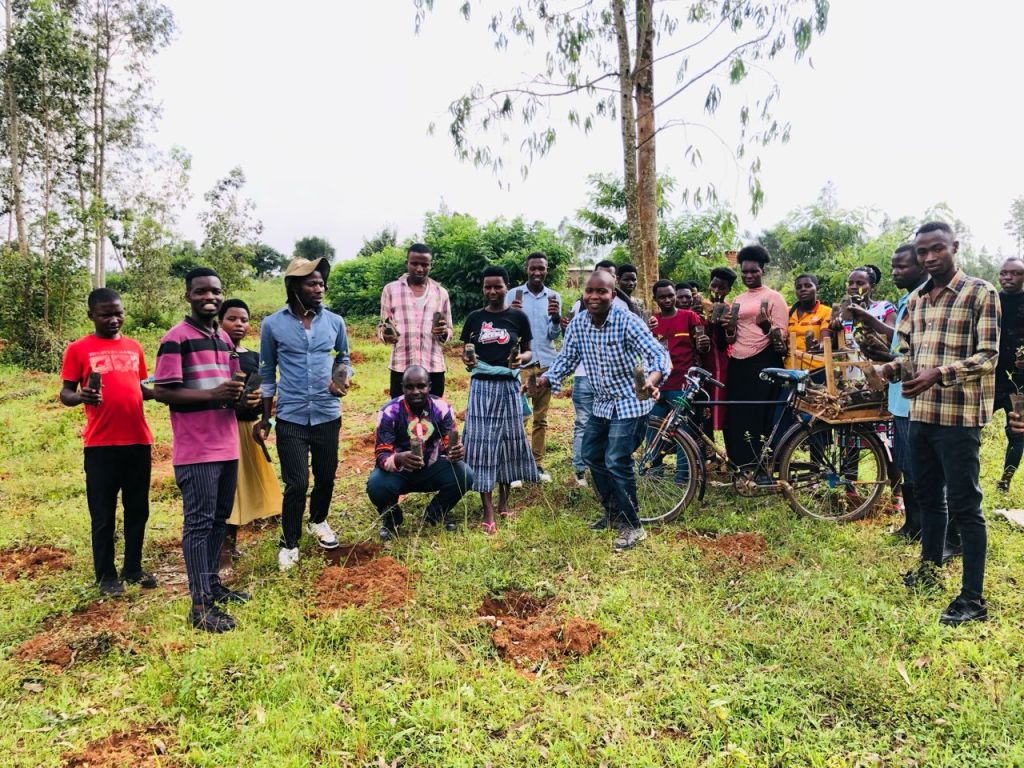
In partnership with Quaker Earthcare Witness (QEW), YIDEC recently planted 2,000 trees in Bugesera District, an area in Eastern Rwanda that frequently experiences drought. The tree-planting effort aims to restore degraded land, enhance biodiversity, and promote long-term climate resilience. YIDEC engages young people through environmental workshops, awareness campaigns, and practical initiatives. The organization is also preparing to launch a small-scale agriculture-for-business program, designed to support youth—especially those affected by climate change and school absenteeism—by equipping them with sustainable livelihood skills.
By combining environmental stewardship with vocational empowerment, YIDEC is working to cultivate a generation of young leaders committed to creating lasting change in their communities and beyond.
The Interfaith Liaison Committee to UNFCCC (ILC) is a network of faith-based organisations active on climate justice. For more than a decade, ILC has brought together faith-based actors at UNFCCC COPs to act together for climate action.
Over the years, calls and statements have been crafted in an inclusive way to call upon the global community to act and take moral responsibility to avoid the most dangerous consequences related to climate change and to protect the most vulnerable from climate-induced catastrophes.
This year, ILC created a call to COP 30 well ahead of the meeting in Brazil. In an inclusive process, ILC invited faith-based actors to contribute to the content of the call in webinars.
This call is now open for endorsements and a tool for advocacy work.
If your organisation wants to endorse it, please do so by signing on here. Everyone is encouraged to use it as a tool to inform decision makers and influential institutions of the global situation we are facing today and the moral obligation to act.
Please read the full Call to Action in English here.
QUNO’s Human Impacts of Climate Change Programme recently compiled an official submission to the United Nations Special Rapporteur on Human Rights Defenders profiling stories of Quaker Environmental Human Rights Defenders. Gathering testimony from Quaker individuals and organizations in Europe and Africa, the submission upholds actions of conscience that Quakers have engaged in as guided by their faith and commitment to the values of stewardship, sustainability, and integrity.
The submission provides a unique and specific focus on the efforts of Quakers because a significant number of high-profile climate change protest action originated in the Quaker community. The report gathers inspiration from their successes while also sharing the risks and retaliation they have experienced as a result of expressing concern over insufficient government action to transform human activities driving planetary crises. The submission will inform that work of U.N. Special Rapporteur on Human Rights Defenders, Mary Lawlor, as she prepares her October 2025 report to the U.N. General Assembly on human rights defenders working on climate change and a just transition. QUNO is grateful to those individuals and groups who shared their personal histories. Such courageous and conscientious acts will further climate justice and calls attention to the rights these defenders are working to protect. In addition to personal stories from Quakers around the world, the submission also offers recommendations for how states and U.N. bodies should advance in protecting environmental human rights defenders.
Please read or download the full text of the statement below:
Image courtesy of ‘Friends Journal’ and FWCC: “Food distribution in Gatumba, Burundi, supported by FWCC’s Climate Emergency Fund, following floods, 2024.“
‘Friends Journal’, a prominent Quaker media publication, recently profiled actions Quaker meetings and communities are taking around the world to address and respond to climate change.
Staff writer Sharlee DiMenichi highlights efforts taken at the local and international levels by Quakers including in Kenya, Bolivia, the Philippines, and at the Intergovernmental Panel on Climate Change. The article demonstrates Friends’ widespread concern for climate as a peace and justice issue while documenting specific examples of the personalized impacts of a warming planet. It delves into the ongoing work of various Quaker organizations including climate related efforts by Friends World Committee for Consultation (FWCC), Friends International Bilingual Center (FIBC), Quaker Earthcare Witness, Earth Quaker Action Team, and Quaker United Nations Office. Portraying the depth and breadth of these actions, it is clear that Friends are witnessing and responding to a wide range of public health, economic, and weather related effects of climate change. Their work is clearly critical in implementing sustainable practices to address climate change’s root causes.
Grounding Quaker action in foundational testimonies of peace, equality, and sustainability is a commitment shared across the world and Friends Journal has written about these efforts in an inspiring and galvanizing piece.
QUNO Geneva Interim Deputy Director and Representative for the Human Impacts of Climate Change, Lindsey Fielder Cook, recently contributed to two webinars focused on climate, peace, and militarism.
In a conversation hosted by Quaker Earthcare Witness, Lindsey and General Secretary of the American Friends Service Committee (AFSC), Joyce Ajlouny, share their experiences with peace and climate justice.
AFSC and QUNO also described their work in a webinar dedicated to exploring “Climate justice in a militarized world”. Presenters from both organizations shared about ongoing Quaker work and advocacy in North and South America, Africa, the Middle-East and at the UN in Geneva.
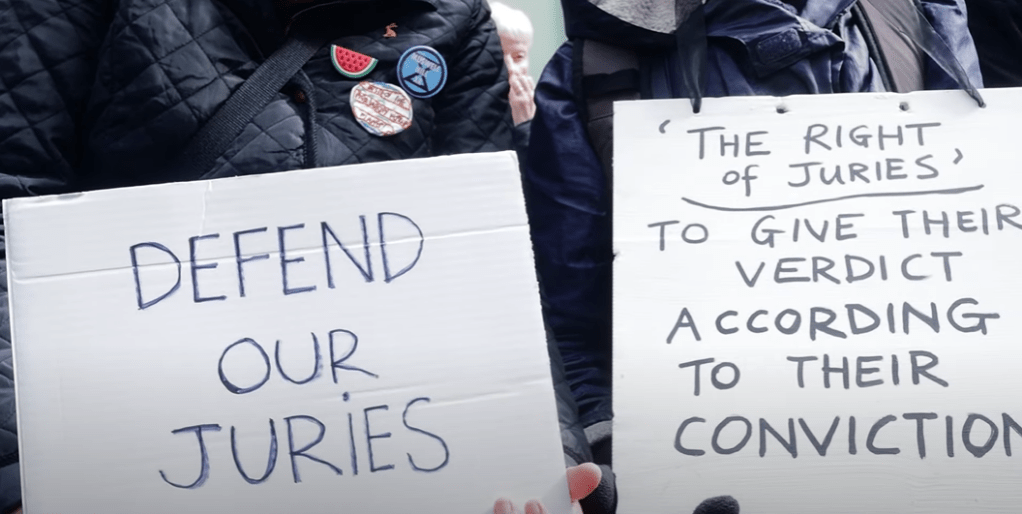
Photo taken from Quaker in Britain’s film of a ‘Defend Our Juries’ Action.
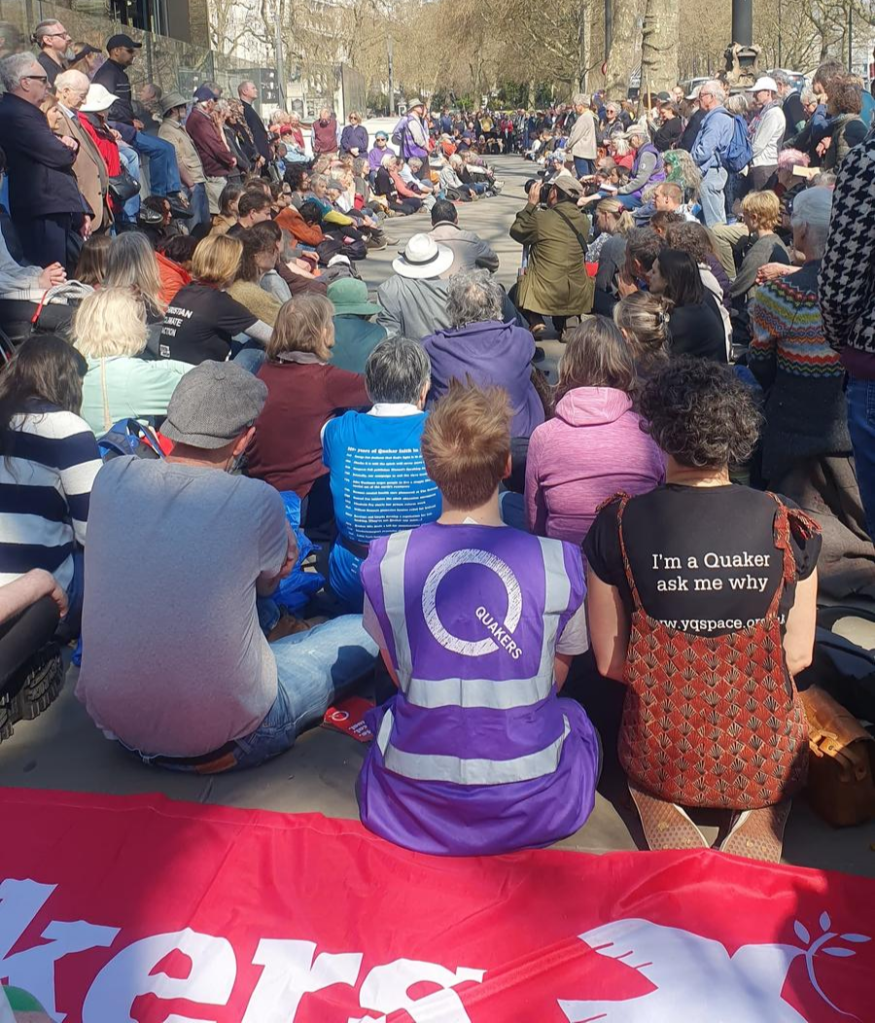
Quakers in Britain have been actively engaging in grassroots action for climate change. Highlights of recent action are detailed below.
Loving Earth (LE) Exhibition: The LE Exhibition is part of the Quaker Arts Network, and comprises textile panels that have been made in workshops considering the question: what do you love? The idea is that, while making the panels, participants reflect on their love for the Earth and their concern with what is happening to the climate. Quakers in Britain made this film and interviewed Jaya, a young Quaker about her responses to it.
Defend our Juries: Defend Our Juries is a movement of grassroots activists, involving many Quakers, to raise awareness of defendants and juries being influenced by judges. In the U.K., there are growing accounts of defendants being instructed not to use terms such as ‘climate change;. In response, DoJ held a people’s assembly inside the Royal Courts of Justice. Watch Quakers in Britain’s film of the action here.
On the same theme, a retired social worker, Trudi Warner, took (copied onto a placard) a piece of writing from on the wall in The Old Bailey (Central London Criminal Court) that reminds juries of their right to ”give their verdict according to their convictions” and stood outside court with it. Trudi was arrested for contempt of court and tried last month, the case was thrown out.
In response, Quakers and other climate campaigners put on this eventthat reenacted the original case that brought the writing to the wall of the Old Bailey. Watch this invitation video, made by Quakers in Britain, to find out the distinctly Quaker history.
Climate Choir:
The Climate Choir was started by a Quaker from Bristol called Jo Flannagan. They featured in the Penn and Mead video and have been present at actions throughout the last few years raising awareness of climate change through song. Find out more here.
Insurance activism:
Many Quakers are concerned about insurance companies and their involvement with the fossil fuel industry. A vigil was held (see this article here) and more direct action, including meetings for worship inside the offices of the insurers, are planned.
Climate Vigils:
Friends have also been involved in ongoing climate vigils throughout the country. You can hear a number of them share their experiences here and news of some others in our most recent here.
For more updates, subscribe to Quaker in Britain’s Faith in Action newsletter here.
Through a monthly newsletter, New Zealand Friends share space, events, wisdom, and testimonies about the climate emergency, highlighting the ways that Friends can mobilize nationally and in community.
You can find inspiration in the following example newsletters here:
The Australian Yearly Meeting Emergency & Species Extinction Working Group is holding online workshops with Quakers throughout Australia to shape the continued work on the Climate Action Plan. The Climate Action Plan was accepted by the Australian Yearly Meeting in July 2023 and calls on Australian Friends to take urgent action to stop the continued damage and harm done to the planet. These efforts include taking action; educating and mentoring; repairing relations with the Earth; reevaluating finances; mourning loss and instilling hope; repairing the Earth; and listening and supporting First Nations Peoples.
In preparation for the 2024 Yearly Meeting, the Working Group—with feedback from Australian Quakers—hopes to expand the action plan to include a witness and accountability process. You can learn more about this work here.
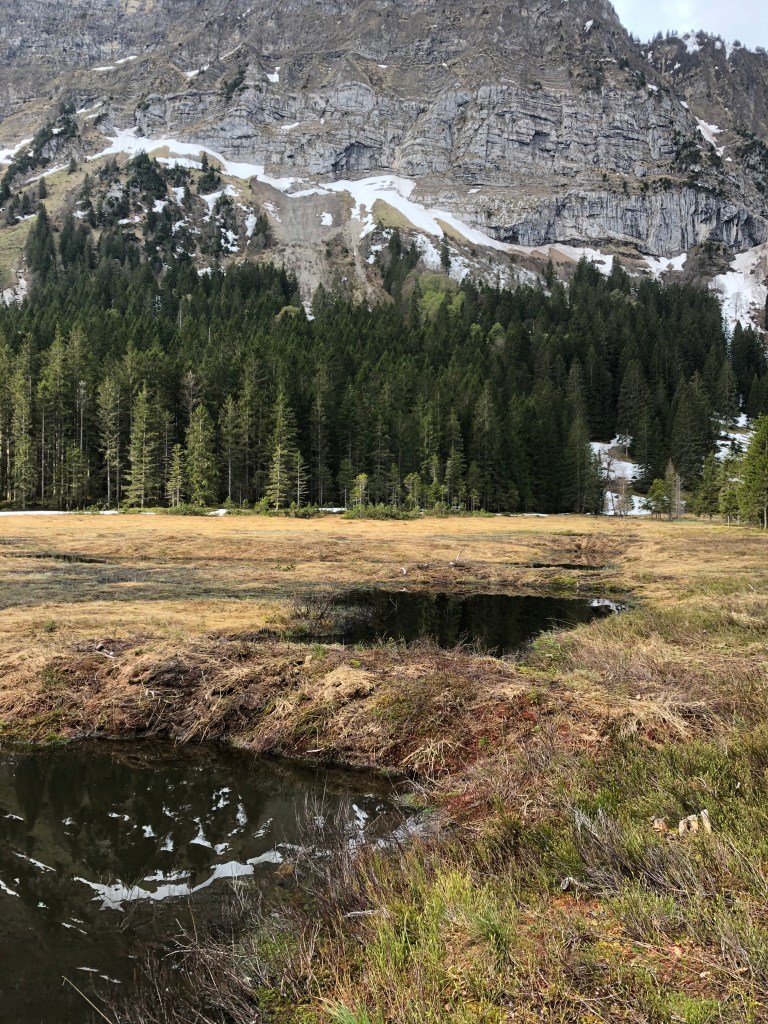
Foto showing the Gross Moss habitat at 1250m altitude. One of the former drainage trenches runs through the picture. Draining the water from the moor by this and other trenches has been blocked through numerous man-made dams perpendicular to the canal (visible in the foto). The resulting water filled basins will “spawn” regrowth of moss plants and, overall, the slow restoration of the moor.
A group of Friends in Zurich, Switzerland have recently become involved in sponsoring a local renaturation project. The group is currently making regular small contributions to the Swiss NGO Myclimate, which is working to restore highland moors in the east of Switzerland. These big marshlands have a major carbon storage potential, which goes untapped unless the moor is “rewetted” following peat extraction or agricultural usage. Myclimate and other NGOs have been gathering financial backing so that this restoration project can take place.
A member of the group, Thomas Gorr, is also involved in his capacity as a biologist, mapping the progress of renaturation through regular visits of the area and by protocoling the ensuing changes in the plant cover and the inhabiting pool of animal species. Thomas writes that by “renaturing (rewetting) moors both a highly effective carbon fixation is fostered and the biodiversity of very rare specialist species (plants and animals alike) will also benefit. In contrast, dried moors (the state moors are usually in across countries of central Europe), act more as a carbon source than as carbon sequestration habitat.”
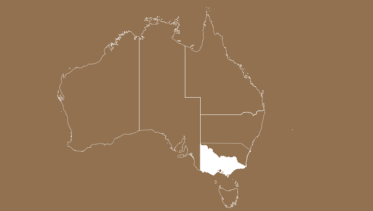
Friends from Victoria, Australia have been in touch to let us know about a newly launched climate network. The VRM Climate Action & Earthcare Network is part of the Victoria Regional Meeting of Friends. The Regional Meeting has about 330 members and attenders and is largely based in metropolitan Melbourne but with small meetings in regional areas.
Gerry Fahey, Co-Convenor of the VRM Climate Action and Earthcare Network wrote to let us know that the Network are taking part in the Greenfaith Sacred People, Sacred Earth campaign action. Greenfaith have organised an international statement that includes 10 demands calling for climate justice. This will be complemented by a day of local actions happening on 11th March 2021. Fahey commented, “The statement is strong and calls on governments and business to work towards real changes. It is at the core of a year on action in 2021 leading up to the COP26.”


 QUAKERS & CLIMATE CHANGE WORLDWIDE