The Friends World Committee on Consultation World Plenary took place in South Africa from August 5-12th this year. As part of the programming and testimony given by Friends globally, QUNO Geneva Interim Deputy Director and Representative for the Human Impacts of Climate Change, Lindsey Fielder Cook, contributed personal reflection by video recording on the theme of ‘care for creation’. Lindsey’s powerful statement provides an overview of QUNO’s work on climate and its ties to deeply rooted Quaker values. Her call to action reflects Friends concerns for intergenerational equity and advocates for solutions that are globally just, addressing the root causes of a climate crisis based on imbalances of money and power.
QUNO Geneva Interim Deputy Director and Representative for the Human Impacts of Climate Change, Lindsey Fielder Cook, recently contributed to two webinars focused on climate, peace, and militarism.
In a conversation hosted by Quaker Earthcare Witness, Lindsey and General Secretary of the American Friends Service Committee (AFSC), Joyce Ajlouny, share their experiences with peace and climate justice.
AFSC and QUNO also described their work in a webinar dedicated to exploring “Climate justice in a militarized world”. Presenters from both organizations shared about ongoing Quaker work and advocacy in North and South America, Africa, the Middle-East and at the UN in Geneva.
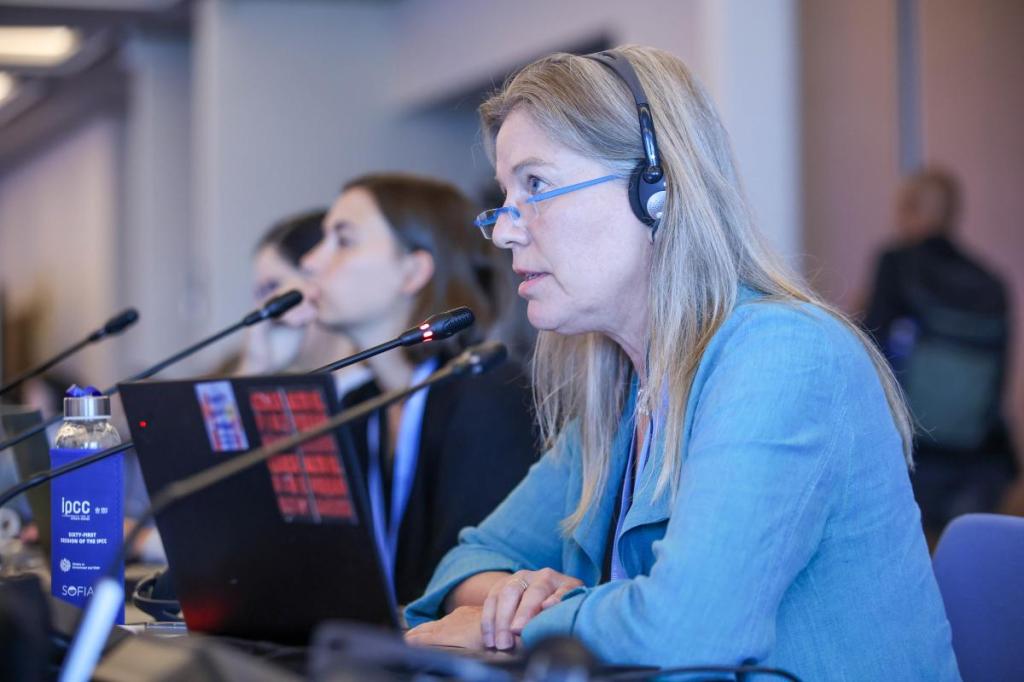
QUNO Geneva’s Human Impacts of Climate Change Programme, speaking on behalf of Friends World Committee for Consultation, took part in the 61st Session of the Intergovernmental Panel on Climate Change (IPCC) in Sofia, Bulgaria from the 27th of July to 2nd of August. Our FWCC interventions and the IPCC Meeting summary are available to read here.
At this session, the panel had to decide on the programme of work for the 7th Assessment Cycle (AR7) and approve outlines of two IPCC products: the Methodology Report on Short Lived Climate Forcers and the Special Report on Climate Change and Cities.
Since 2017, QUNO has been the only independent faith-based observer at the IPCC. At this session, QUNO made interventions to raise concerns over the failure to include military emissions in greenhouse gas inventory and the dangerous reliance on speculative technologies such as large-scale carbon dioxide removal (CDR) over transformation of root causes. QUNO also highlighted the need to ensure inclusivity and transparency, to uphold the integrity of science in the upcoming cycle, to focus on protecting the most vulnerable, and for discussions of the ‘cost’ of inaction to include cost to human lives and not just economic.
By the end of the session, the IPCC approved the two outlines for further work and delayed the decision on the programme of work to the next plenary session in late February of 2025.
In addition to advocacy at negotiations, QUNO also works to communicate IPCC findings to wider audiences to help empower urgent, transformative and equitable climate action. The latest related QUNO publications include a toolkit for Government Officials and a personal guide on what we can do. Both are available in English, French, Spanish, and Arabic.
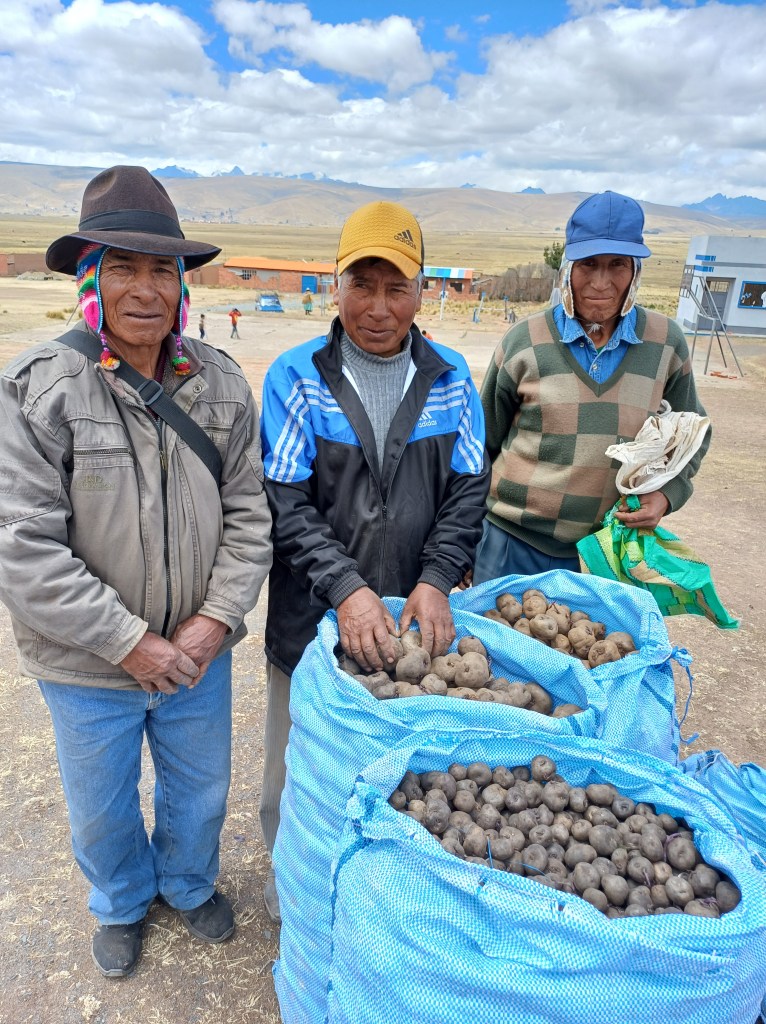
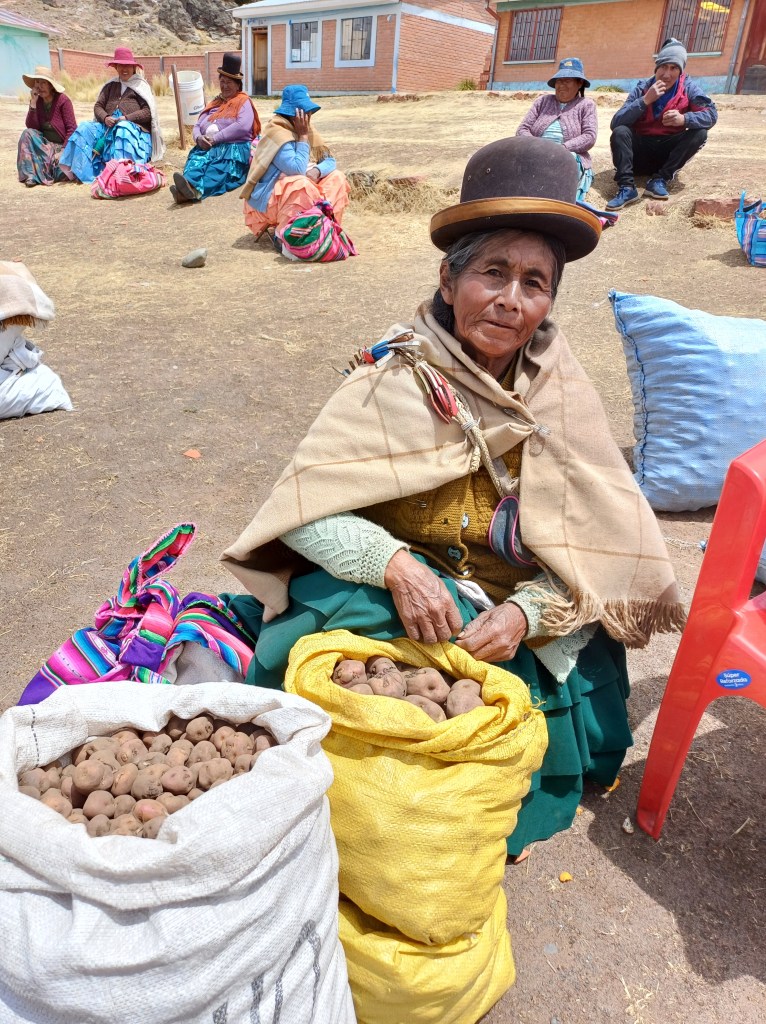
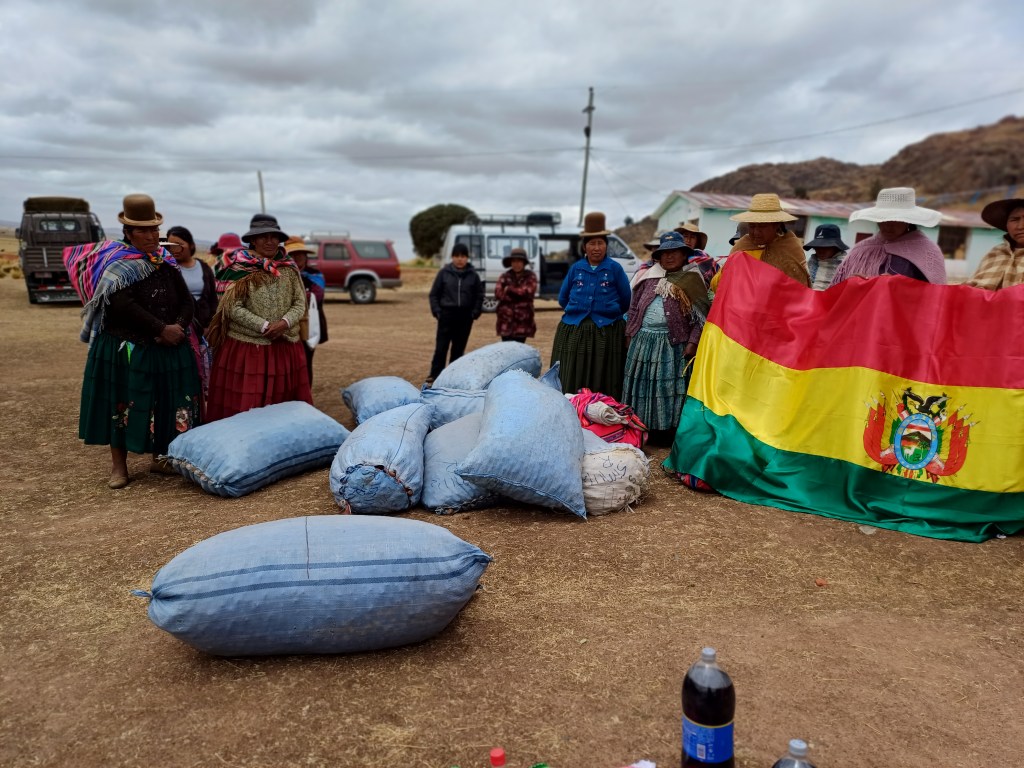
Bolivian young adult volunteers from the Friends International Bilingual Center (FIBC) have organized a Food Security Project to address the impact of climate change on indigenous families in the highland villages. In 2022, these communities faced hunger due to severe drought related to climate change. Many families who depend on the potato crop for food lost their main source of food and faced famine. Without intervention the crisis would have continued for multiple years because one year’s harvest provides seed for the next season’s crop.
In the first half of 2023 FIBC distributed 100 pounds of potatoes to each family at a cost of $50 per family. Then in October, 2023 more than 300 families each received 125 pounds of seed potatoes at a cost of $50 per family. With favor of God, in 2024 the families who benefited from the Food Security Project had a good harvest to sustain their families. So, they thanked God, and also deeply appreciated the young volunteers and donors.
However, last year FIBC was not able to provide potatoes or seed potatoes to other families in these indigenous communities. In 2024 we have been distributing food staples to prevent famine. Also, we plan to raise $7,500 (USD) to distribute seed potatoes to these addition communities in time for the Bolivian planting season, October and November of 2024.
FWCC World Office and Europe and Middle East Section (EMES) are jointly committed to contribute to carbon offsetting to support the Climate Emergency Fund (CEF). The CEF seeks to provide short term funding to projects presented by members of Quaker meetings and yearly meetings, especially those in the Global South experiencing the immediate impacts of the climate crisis. The maximum amount given cannot exceed 500 British Pounds. The fund is administered by the Justice and Peace Secretary, in consultation with the General Secretary and Treasurer upon submitting an application to the World Office.
For more information and to donate, please click here.
The following links highlight Quaker led side events at international climate negotiations at the United Nations Framework Convention on Climate Change (UNFCCC).
SB60 – ‘How ethical values can guide more successful and effective NDC policies’
COP28 – ‘Shifting money and power: true transformational climate action as a peace and justice multiplier’
SB58 – ‘Truthful engagement in real, effective and ethical emission reductions for an ambitious GST’
COP27 – ‘Effective, ethical, and equitable climate action in the Arctic: the role of climate justice’
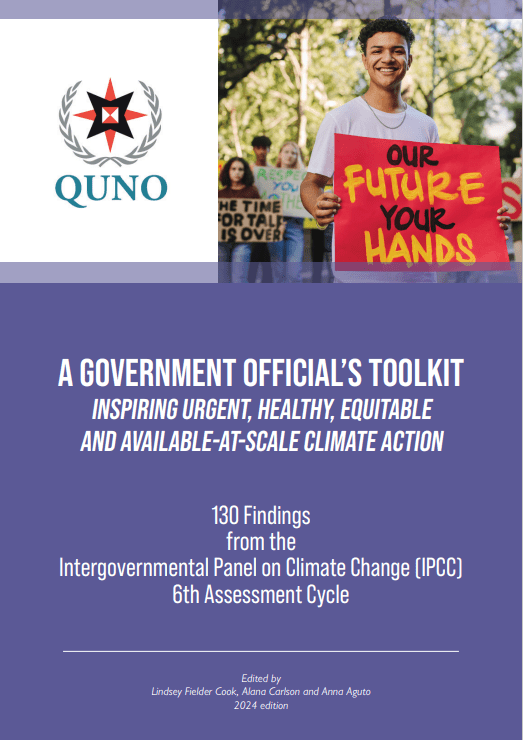
The Quaker United Nations Office (QUNO) in Geneva published an updated version ‘A Government Official’s Toolkit: Inspiring Urgent, Healthy, and Equitable Climate Action,’ which is available in English, Arabic, French, and Spanish. This publication is aimed at enhancing understanding and communication of climate change.
‘A Government Official’s Toolkit: Inspiring Urgent, Real, and Equitable Climate Action’ has been updated with the most recent scientific findings from the Intergovernmental Panel on Climate Change’s (IPCC) 6th Assessment Report (AR6). This report was compiled for just over seven years and involved hundreds of scientists worldwide.
The IPCC informs governments on what is happening, why, and what people can do to avert catastrophic climate change.
QUNO’s updated ‘A Government Official’s Toolkit’ aims to empower policymakers and climate advocates with the latest IPCC findings on root causes and urgent, feasible, and near-term options that are already available at scale to address climate change and improve well-being and planetary health. QUNO believes that everyone should have easy access to the science presented to our governments.
This publication is accessible online and via a print-at-home version, which can be used for personal distribution and campaigning.
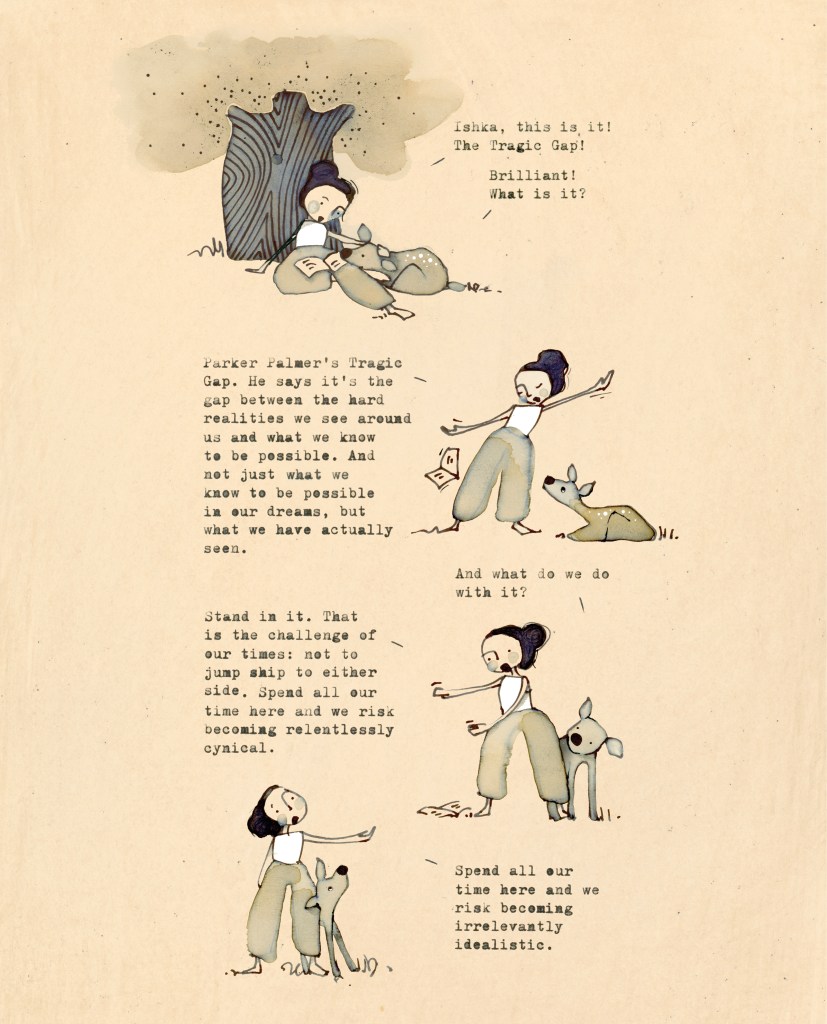
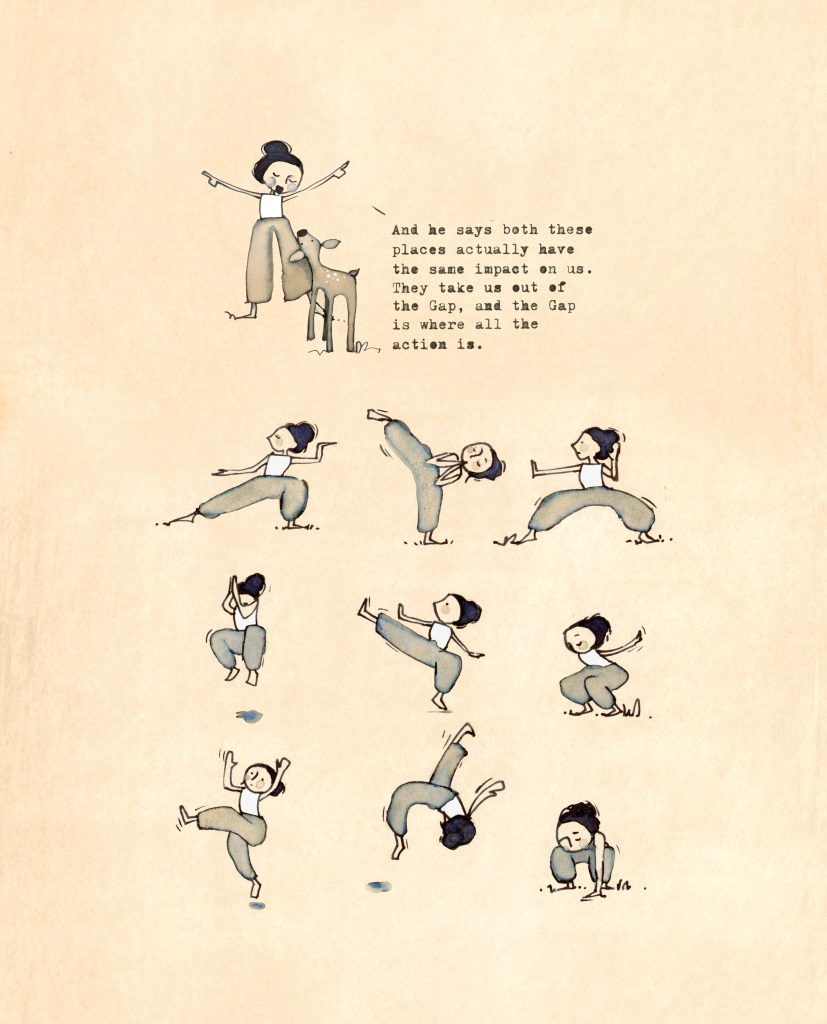
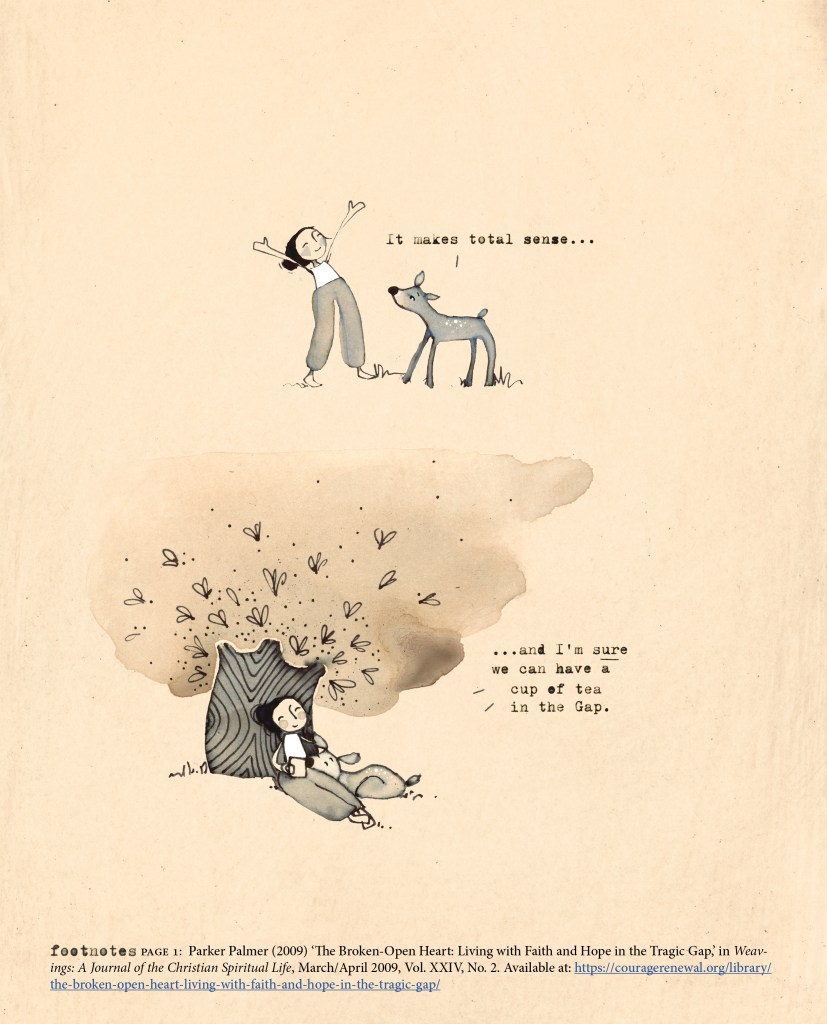
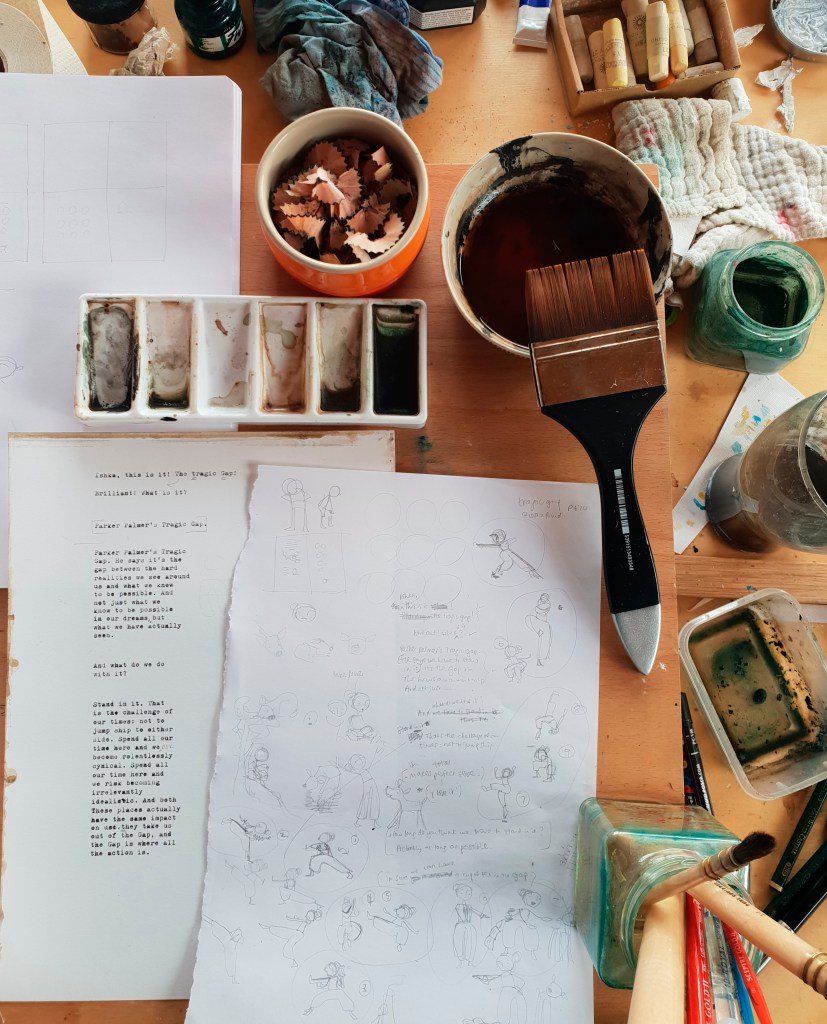
Lynn Finnegan, a Quaker based on the north coast of Ireland, is doing a year-long art and storytelling project called Fig & Ishka. It involves illustrated stories about two friends who paddleboard, grow food, read, hike, and sit around the fire together. They are also trying to show up to the world’s current ecological and social crises without jumping ship to complacency, cynicism or despair. Fig & Ishka often draws upon wisdom found in the teachings of Quakerism, systems thinker and activist Joanna Macy, and Buddhist Zen master Thich Nhat Hanh.
The illustrations are done with tea, ink, water and her dad’s old typewriter. They are released every Friday for one year, starting from February 2024: you can browse them all, and subscribe to new weekly posts, at www.lynnfinnegan.substack.com.
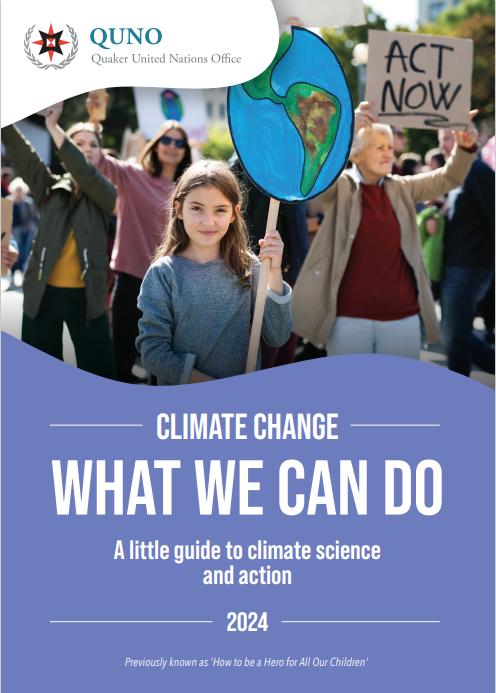
The Quaker United Nations Office (QUNO) in Geneva published a ‘Climate Change: What We Can Do” (previously known as ‘How to be a Hero for All Our Children’) which is available in English, Arabic, Spanish. and French. It aims to connect people with the most recent climate science and suggests personal actions and questions for politicians.
‘What We Can Do’ has been updated with the most recent climate scientific findings from the Intergovernmental Panel on Climate Change’s (IPCC) 6th Assessment Report (AR6). This report was compiled over seven years and involved hundreds of scientists worldwide.
‘What We Can Do’ is written for a wide audience, whether already active or new to climate concerns. It includes categories such as “What we eat”, “How we grow and sell food”, and “How we use and source energy.” This publication is meant to aid in our collective empowerment to transform the root causes driving planetary crisis.
This publication is accessible online and via a print-at-home version which can be used for personal distribution and campaigning.
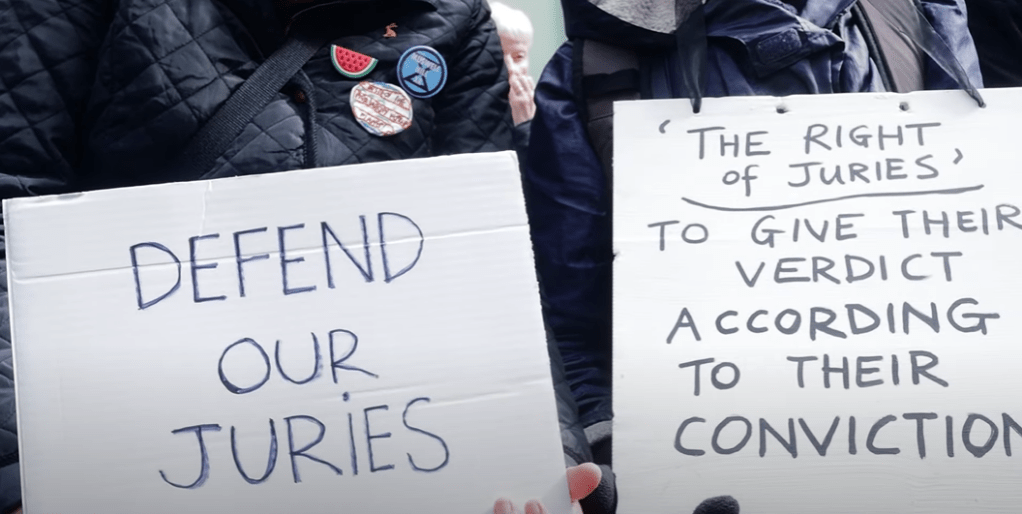
Photo taken from Quaker in Britain’s film of a ‘Defend Our Juries’ Action.
Quakers in Britain have been actively engaging in grassroots action for climate change. Highlights of recent action are detailed below.
Loving Earth (LE) Exhibition: The LE Exhibition is part of the Quaker Arts Network, and comprises textile panels that have been made in workshops considering the question: what do you love? The idea is that, while making the panels, participants reflect on their love for the Earth and their concern with what is happening to the climate. Quakers in Britain made this film and interviewed Jaya, a young Quaker about her responses to it.
Defend our Juries: Defend Our Juries is a movement of grassroots activists, involving many Quakers, to raise awareness of defendants and juries being influenced by judges. In the U.K., there are growing accounts of defendants being instructed not to use terms such as ‘climate change;. In response, DoJ held a people’s assembly inside the Royal Courts of Justice. Watch Quakers in Britain’s film of the action here.
On the same theme, a retired social worker, Trudi Warner, took (copied onto a placard) a piece of writing from on the wall in The Old Bailey (Central London Criminal Court) that reminds juries of their right to ”give their verdict according to their convictions” and stood outside court with it. Trudi was arrested for contempt of court and tried last month, the case was thrown out.
In response, Quakers and other climate campaigners put on this eventthat reenacted the original case that brought the writing to the wall of the Old Bailey. Watch this invitation video, made by Quakers in Britain, to find out the distinctly Quaker history.
Climate Choir:
The Climate Choir was started by a Quaker from Bristol called Jo Flannagan. They featured in the Penn and Mead video and have been present at actions throughout the last few years raising awareness of climate change through song. Find out more here.
Insurance activism:
Many Quakers are concerned about insurance companies and their involvement with the fossil fuel industry. A vigil was held (see this article here) and more direct action, including meetings for worship inside the offices of the insurers, are planned.
Climate Vigils:
Friends have also been involved in ongoing climate vigils throughout the country. You can hear a number of them share their experiences here and news of some others in our most recent here.
For more updates, subscribe to Quaker in Britain’s Faith in Action newsletter here.
 QUAKERS & CLIMATE CHANGE WORLDWIDE