 QUNO, under the Friends World Committee for Consultation, is the only faith-based organization accredited as an observer to the Intergovernmental Panel on Climate Change (IPCC), which collates climate science findings to advise all countries. While government representatives cannot change text in the reports, they can negotiate language in the Summary for Policy Makers (SPM), so long as the integrity of the findings is not affected. Negotiation can result in weakening SPM language. At the recent IPCC meeting on Land, QUNO’s Representative for Climate Change, Lindsey Fielder Cook, sought to protect language on sustainable and restorative behavior (diet, farming, consumption, restoration/regeneration of eco-systems) and consequences to insufficient action to reduce greenhouse gas (GHG) emissions. She summarized the Report’s main messages as: 1) land is currently absorbing (sink) some 20% of GHG emissions, 2) land degradation must be reversed and overall GHG emissions reduced, and 3) without this, land will become a GHG emission ‘source’, leading to irreversible eco-system collapse and ‘substantial additional GHG emissions from ecosystems that would accelerate global warming’.
Author: quakersandclimate
Special Report on Human Rights Obligations Relating to the Enjoyment of a Safe, Clean, Healthy, and Sustainable Environment
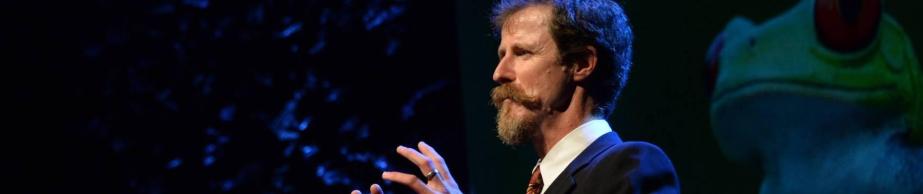
On July 15th, 2019, the Special Rapporteur on Human Rights and the Environment, David R. Boyd (pictured) released a special report on the human rights obligations relating to the enjoyment of a safe, clean, healthy, and sustainable environment. This report starts with a summary of up-to-date climate science and stresses the urgency the magnitude and imminence of the changing climate poses to humanity. He then charts how different human rights establish obligations from states and other capable actors to require action. For example he discusses the right to health, and that in a world with unmitigated climate change health hazards, ranging from more prevalent air- and water-borne diseases to significant mental impacts, will become more frequent and lethal.
Boyd explains that climate change has two distinct human rights dimensions; there are the particular impacts climate change will have on the enjoyment of human rights as illustrated above, and that any approach to successfully and sustainably deal with climate change must take in account human rights challenges. This is paired with a call for states to fulfill their obligations through transparent, accessible, and gender-responsive actions towards a low-carbon and climate-resilient future. Boyd also calls on businesses to implement policies that account for their impacts on both human rights and climate change. Lastly, Boyd includes recommendations that call for action, particularly in the fields of vulnerable communities, ramping up climate finance, and empowering international institutions such as United Nations bodies, to act to ensure cross-border action occurs.
Can veganism be part of a Quaker approach to climate change?
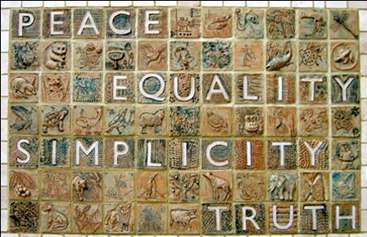
Quaker Values and a Vegan Future.
An attender of Stourbridge and Hampstead Meetings, Britain, Rajan is very interested in exploring ways in which the powerful, core values of Quakerism might find better expression and implementation among Quakers and others. He believes a conscientious, proactive reduction in our routine exploitation of other animal species is one very good place to start.
Rajan warmly encourages everyone to find some small area of activism in their life and make that their own area of cultivation, development and exploration.
Read Rajan’s article here.
David Boyd’s report on the Right to a Healthy Environment.
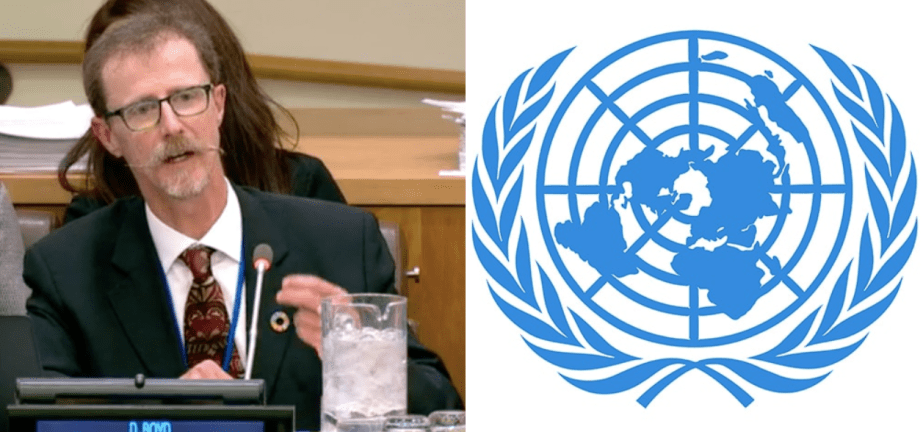
In his report to the Fortieth Session of the Human Rights Council of march this year, the new Special Rapporteur on human rights and the environment, David Boyd, highlights global normative acceptance of states regarding their obligations to provide a healthy environment. In his report, Boyd states: “In total, at least 155 States are legally obligated, through treaties, constitutions, and legislation, to respect, protect and fulfil the right to a healthy environment.”
Boyd’s report argues for the fastest possible action to respond to the most pressing environmental issues. The proof that the majority of countries already have legally enshrined this obligation is compelling evidence of a growing consensus enough to encourage the multilateral fora to take swift and effective action to be proactive in providing a healthy and safe environment.
You can read the Special Rapporteur’s report here.
Human Right Council’s Environmental Human Rights Defender Resolution
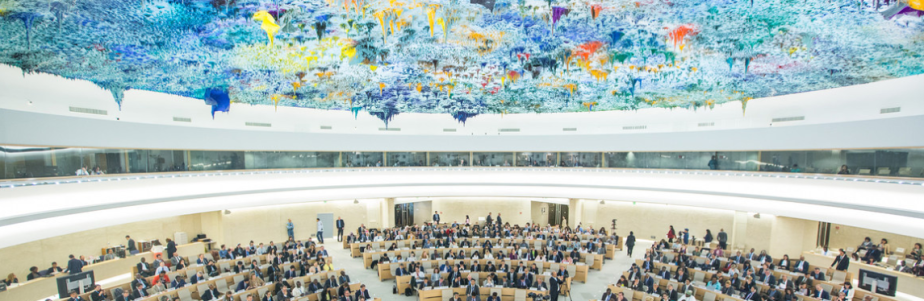
On March 21, the 40th session of the Human Rights Council adopted a resolution recognizing the importance of environmental human rights defenders and their protection.
The resolution was proposed by Norway and titled “Recognizing the contribution of environmental human rights defenders to the enjoyment of human rights, environmental protection, and sustainable development.”
Why was this resolution needed:
Environmental human rights defenders play a key role in protecting ecosystems and supporting a healthy and sustainable environment for all. Defending nature against greater destruction often comes with immense risks; in 2018, 321 human rights defenders were targeted and killed for their work — the highest number on record so far. More than three-quarters of those murdered were environmental human rights defenders.
Key aspects of the resolution include:
- Countries are called to adopt laws and protection measures to guarantee protection for defenders
- A requirement for accountability for attacks and threats against defenders
- A call for businesses to carry out due diligence and meaningful inclusion and consultation for those who would be affected by their plans
You can view the declaration here
QUNO at the COP24 Summary

In December QUNO attended the COP24 in Katowice, Poland. Lindsey Fielder Cook feeds back on the outcomes of the COP and the negotiations on the Paris rule-book in her article ‘The Bare Minimum‘.
At the COP, QUNO worked with others to create a side event that gathered a diversity of voices. With speakers from the interfaith community, a scientist from the IPCC, and leadership from the UNFCC the event’s focus was on working together across differences: Building a Spirit of Solidarity to overcome climate crisis Thursday, 06 Dec 2018 15:00-16:30. A recording of the event is still available to view via the UNFCCC webcast site.
QUNO also observed the operationalisation of the Local Communities and Indigenous People’s Platform, which will meet for their first Facilitated Working Group meeting in Bonn preceding the SB50.
A summary of the COP’s outcomes are available on the UNFCCC website.
Escazu, Ground breaking environmental protection
The Escazú Agreement is a ground breaking multilateral agreement signed by 16 Latin America and Caribbean nations that will be a crucial tool for climate and environmental protection in the years to come.
Articles 8 and 9 concern access to justice, especially significant for human rights defenders.
IPCC’s Summary for Policy Makers

At the end of 2018 the IPCC published their full report on the difference between 1.5 °C verses 2 °C warming. The report was a comprehensive 700 page exploration. The United Nations met in Inchon in South Korea to negotiate the Summary Report for Policy Makers. This special report is the much shorter with less information on the impacts of global warming of 1.5 °C above pre-industrial levels and related global greenhouse gas emission pathways. The report was defined by the political voices in the room, but was crafted to help states choose actions in the context of strengthening the global response to the threat of climate change, sustainable development, and efforts to eradicate poverty.
The full report , the summary report and more are both available on the IPCC’s website.
A Government Official’s Toolkit
QUNO completed their newest toolkit in time for 2018’s Conference of the Parties (COP24) in Katowice.
The document was aimed at ensuring that negotiators and government officials. Every single argument made in the toolkit was referenced to the most up-to-date scientific research, meaning that officials had access to all the facts that they needed in order truly understand the importance of their own actions at the COP and beyond.
You can access the toolkit here.
In Memory of an Important Activist, Alan Burns

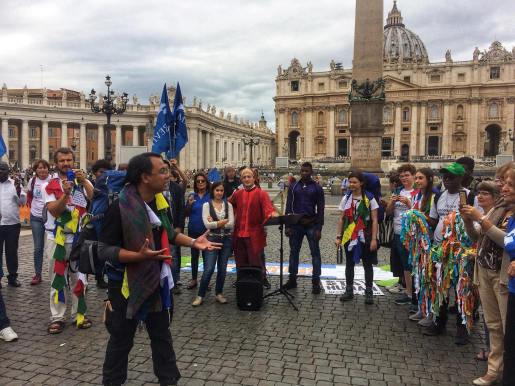
Today, and for the duration of the COP 24 we will be holding Friend Alan Burns in the light. Alan passed away on the 11th of November whilst carrying out a pilgrimage from the Vatican to Katowice. More information about Alan is available on his blog. To hear about the pilgrims who have continued their walk, more information is available on the Facebook page.
We thank Liz for writing this post and sharing it with us.
“Many of you know that my husband Alan Burns has been in Europe for the past several months on a pilgrimage to raise awareness about climate change. He and a group of fellow activists were walking from Rome to Katowice Poland in time for the Climate Conference. I received news Sunday morning that Alan had died while the pilgrims were in Slovenia. Please hold Alan, his family, and his friends in the light as we process this transition, and do whatever is in your power to continue his work to avert the worst catastrophe this planet has faced. Alan was a kind soul and a tireless worker for peace, justice, and equality; he lived his life as he hoped others would, and I think died doing exactly what he wanted to be doing – helping the save the world.”
We are grateful to Alan for his life and his unwavering light given to the important issue of climate change which is also close to our own hearts.