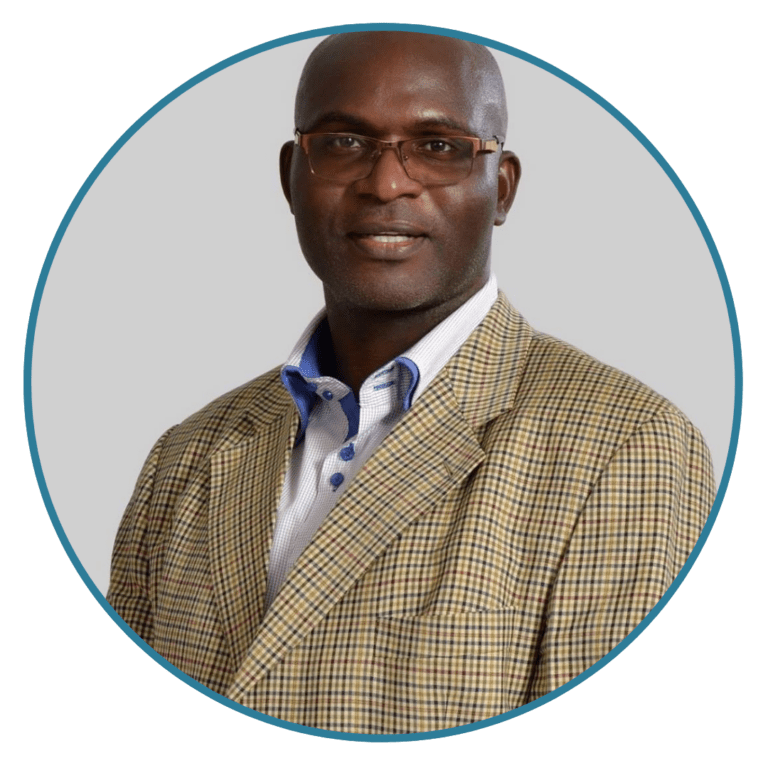
Hezron Masitsa, the Justice and Peace Secretary for Friends World Committee for Consultation (FWCC) recently shared his research and reflections on traditional food preservation as part of the 2025 Eva Koch Scholar Presentations.
Selected by Woodbrooke, an international Quaker learning center, to be an Eva Koch Scholar in the 2025 calendar year, Hezron’s research provides insight and investigation into traditional indigenous practices that have received little past examination and show the wisdom of native practices in East Africa. His complete research paper can be read below and provides an overview of his outreach and interviews with elders to learn about traditional food preservation methods used to improve infant mortality and bolster adult health and longevity. Food shortages in Africa due to environmental crises have had devastating impacts on community health and these traditional practices are important to consider as climate change exacerbates the impact and frequency of drought and famine. In his Eva Kock Scholar Presentation (available to watch here), Hezron describes how learning about traditional indigenous food preservation practices uphold Quaker values of sustainability and stewardship. His words and research inspire us to further embrace longstanding wisdom into how best to safely and healthily live in harmony with creation.
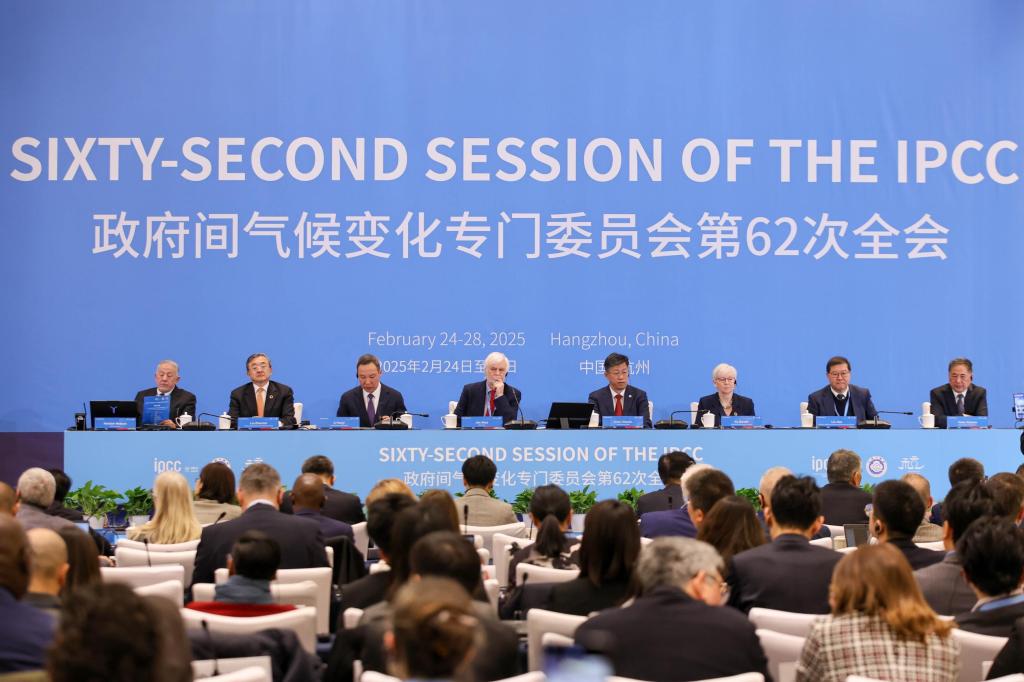
In Spring 2025, QUNO Representative for the Human Impacts of Climate Change participated in the 62nd Session of the Intergovernmental Panel on Climate Change (IPCC).
As an accredited observer of the IPCC through FWCC since 2017, QUNO seeks to uphold transparency and the integrity of the science, encourage clear messaging on urgent, transformative and rights-based climate action, and maintain a focus on risks to some climate technologies which fail to transform root causes and/or pose high risks to people and biodiversity. To date, QUNO is the only active independently accredited faith-based organization at the IPCC.
QUNO Geneva’s Human Impacts of Climate Change (HICC) team, was intensely active at the UN Climate Change meetings in Bonn. These Subsidiary Body convenings (SB62) were held by the UN Framework Convention on Climate Change (UNFCCC) from 16-26 June in preparation for the upcoming COP in Brazil.
This is the 13th year QUNO has offered quiet diplomacy dinners to a group of high level negotiators from a diverse group of countries. In addition to this effort, QUNO was engaged in negotiations, in two preparatory Constituted Bodies, in several inter-faith efforts, in two press conferences, an off-the-record meeting with climate scientists, in human rights advocacy, in Paris Agreement celebrations, and in the distribution of QUNO publications on climate science findings. To learn more, read the full recap of our work on the QUNO website.
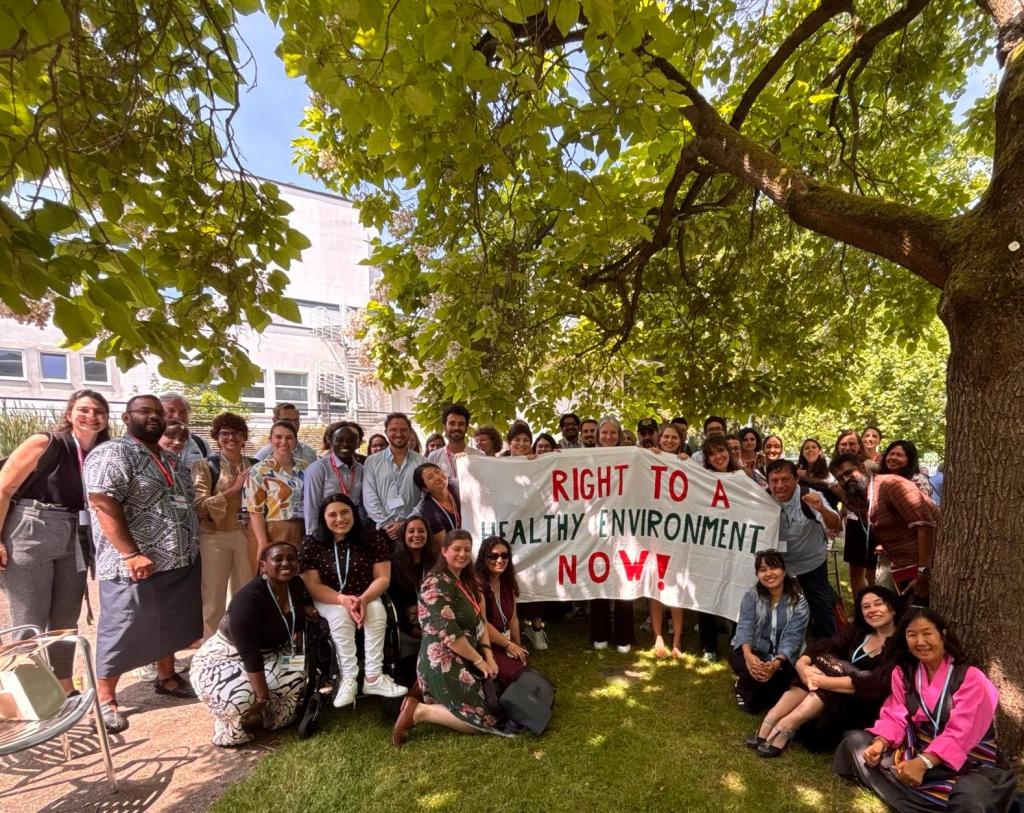
[Members of the Human Rights and Climate Change Working Group at the 2025 UN Climate Change Conference in Bonn, Germany. ]
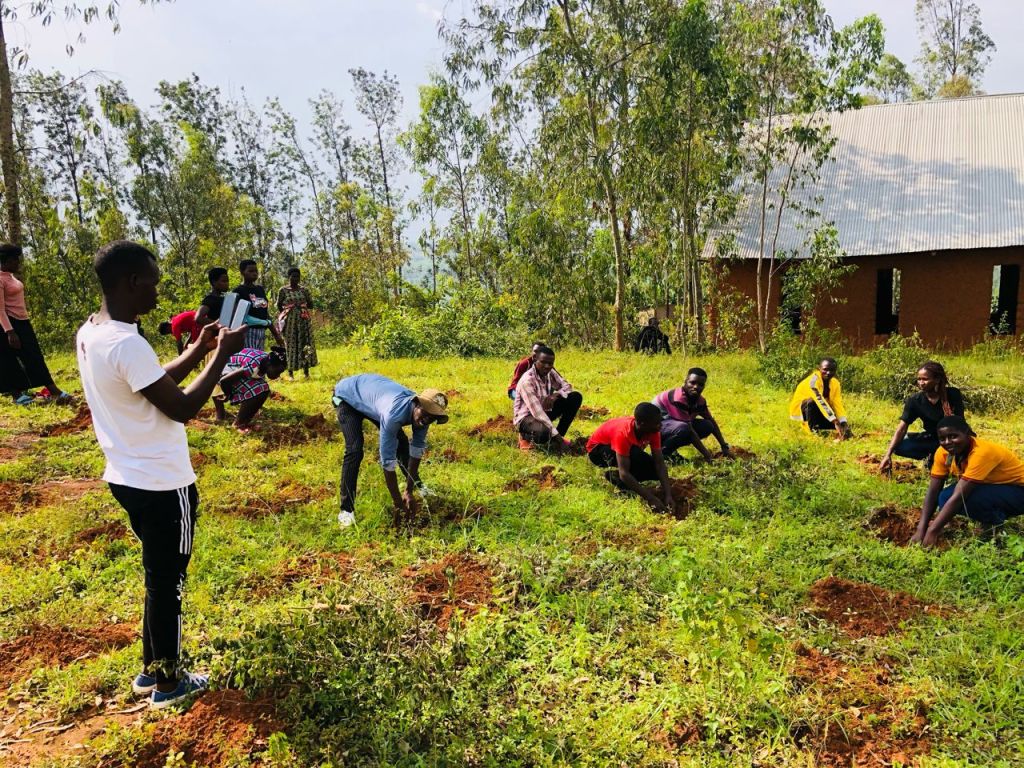
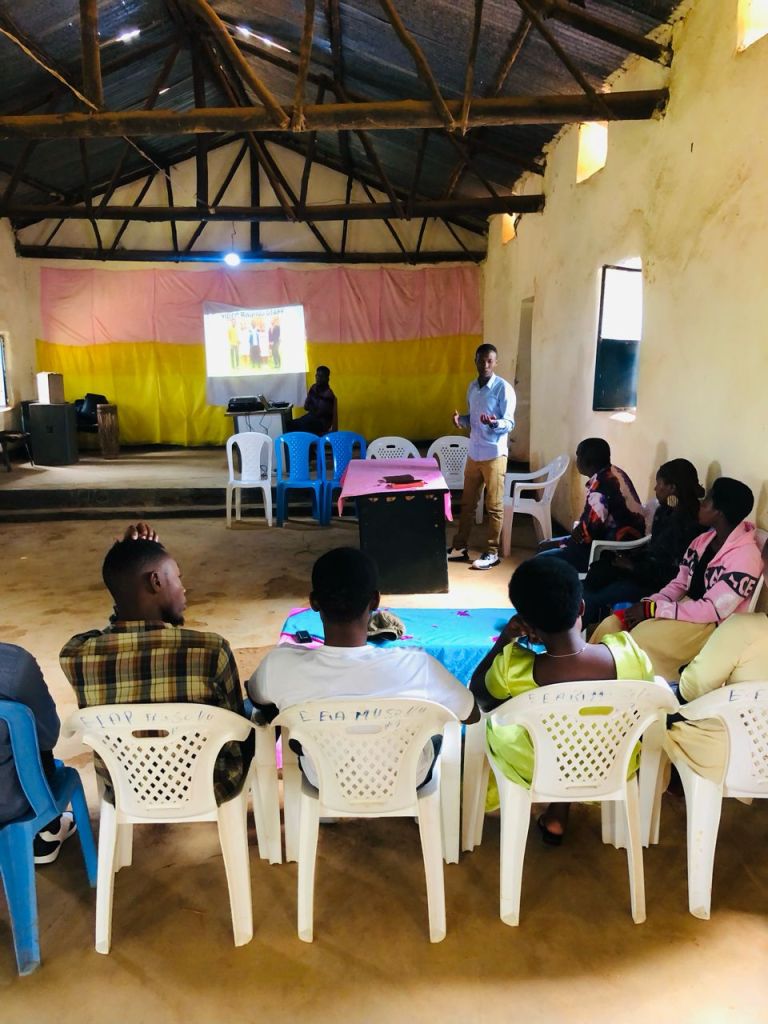
A youth-led initiative founded by Quaker United Nations Summer School alumni, Youth Impacts Development and Environmental Change (YIDEC), has been working in Rwanda to address the challenges of climate change through education, environmental action, and youth empowerment.
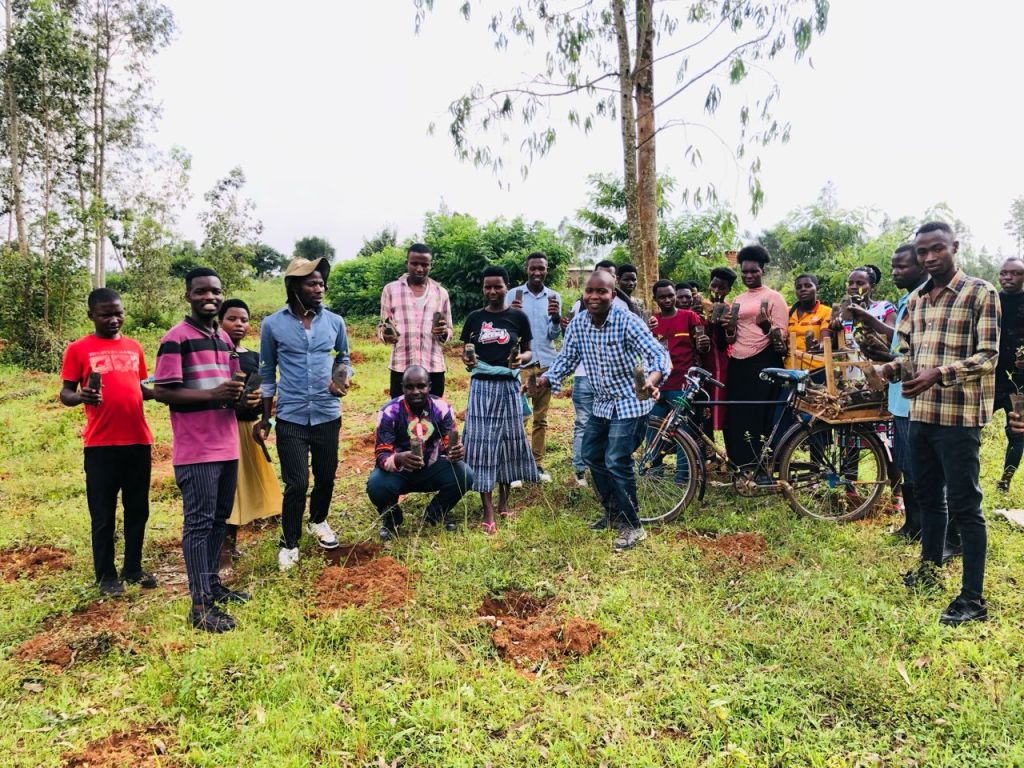
In partnership with Quaker Earthcare Witness (QEW), YIDEC recently planted 2,000 trees in Bugesera District, an area in Eastern Rwanda that frequently experiences drought. The tree-planting effort aims to restore degraded land, enhance biodiversity, and promote long-term climate resilience. YIDEC engages young people through environmental workshops, awareness campaigns, and practical initiatives. The organization is also preparing to launch a small-scale agriculture-for-business program, designed to support youth—especially those affected by climate change and school absenteeism—by equipping them with sustainable livelihood skills.
By combining environmental stewardship with vocational empowerment, YIDEC is working to cultivate a generation of young leaders committed to creating lasting change in their communities and beyond.
Permaculture For Refugees (P4R) is an organization that seeks to sustain livelihoods and ecosystems by inspiring sustainable permaculture practices in refugee camps and communities globally.
In the past, peacebuilding efforts by P4R have aided refugee communities around the world including in East Africa and Bangladesh. Following a year of global conflict, their teachings have been more essential than ever to the many displaced by strife and violence in domestic and international settings.
With strong historic and continuing support from Australian Quakers, P4R is now working to support permaculture practices and practitioners in the Middle East with a specific focus on Gaza. In addition, in Myanmar their network is setting up refugee schools with permaculture instruction for ethnic minorities from Malaysia. A new permaculture teacher training in Spain is occurring with a focus on refugees and a Ukrainian ecovillage has been providing news of their permaculture instruction.
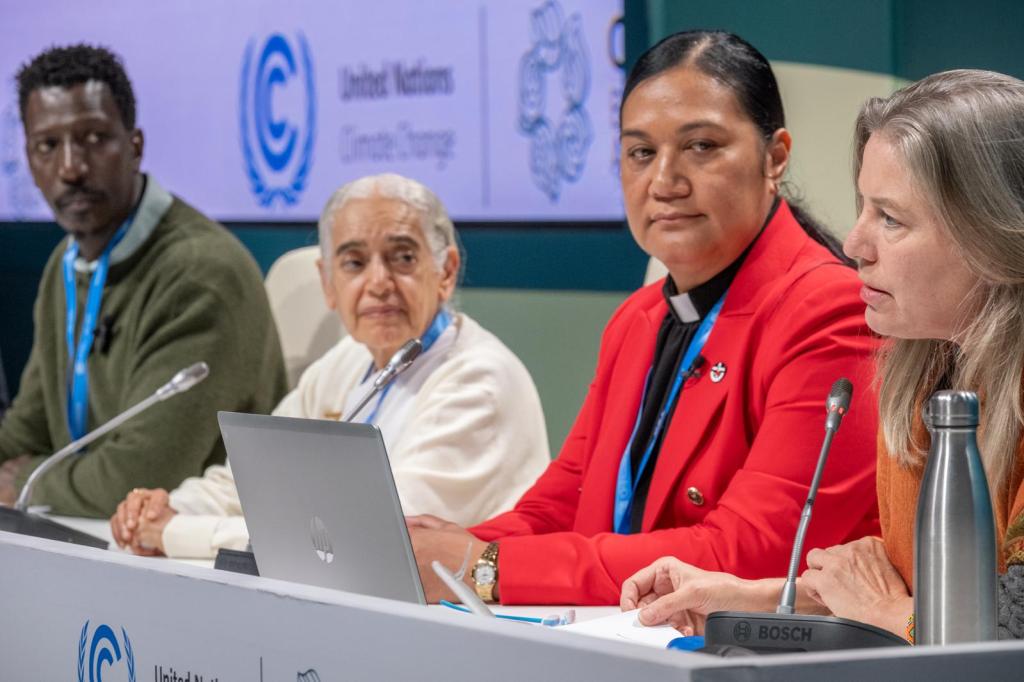
Lindsey Fielder Cook, Interim Deputy Director and Representative for the Human Impacts of Climate Change at the Quaker United Nations Office, reports back from COP29. (This piece is reposted from Britain Yearly Meeting. The original can be found here.)
The atmosphere during the recent climate change Conference of Parties 29 (COP29) in Baku, Azerbaijan, at times felt ominous. Trust between countries, always fragile, received hard blows.
Photo credit: Simon Chambers/ACT
The wider political influences
At its core, the COP29 was about increasing financial commitments from developed to developing countries, at a time when the wealthiest and highest greenhouse gas (GHG) emitting developed country was likely to leave the process. More widely, the COP was held in a dangerous time for international relations. Powerful member states threaten use of nuclear weapons, block ceasefires and remain silent over a plausible case of genocide and attacks on UN agencies, openly reject the highest legal voices (International Court of Justice and International Criminal Court), and systemically underfund multilateral bodies while global military spending now surpasses 2.4 trillion USD. The COP29, like the recent UN Summit of the Future in September, the biodiversity COP and negotiations for a treaty on plastic pollution, have all been affected.
The COP29 began with host nation Azerbaijan referring to fossil fuels as a “gift from God”. In the negotiation room, countries discussed greenhouse gas (GHG) emissions mitigation, yet nearly every fossil fuel wealthy country in the room planned oil and gas production increases which would eliminate chances for a 1.5°C global temperature rise limit.
The denial in the room is no longer about the dangers of climate change – this is agreed. The denial now regards the ‘how’ as countries look to false solutions including geo-engineering. Too few decision makers are ready to honestly address root causes driving planetary crises in our unsustainable and inequitable energy, economic and agriculture systems. Nonetheless, there are some brave actors in the room including Colombia, which announced a cap on fossil fuel extraction. Meanwhile the UK reiterated Labour’s manifesto commitment to cap new oil and gas licenses.
What was agreed, what is at stake
Leading up to the COP29, negotiators had three years to prepare a new collective quantified goal for climate finance (NCQG), set to replace and update the ‘100 billion USD a year by 2020’ promise critical to establishing the 2015 Paris Agreement. However, that 100 billion USD a year did not materialise fully until after 2020, and harmed trust in this process.
Over the years, civil society including the Quaker United Nations Office and Quakers in Britain have proposed approaches that would make polluters pay, including fair sources of finance for loss and damage (PDF). The Paris Agreement committed developed countries to lead on financing and mitigation; they have the highest per capita GHG emissions, the highest historical emissions, and in most cases benefited financially from colonisation.
However, at the COP29 we witnessed stand-offs, last minute drafts, selective sharing, walkouts, and final language mirroring the last ineffective finance deal. Specifically, inclusion of the word ‘by’ in the clause “with developed countries taking the lead, of at least USD 300 billion per year by 2035″. The ‘by’ allows 11 years for full delivery. The text also contains no clear commitment to protect sufficient grants rather than loans that exacerbate debt, it includes many references to private finance over public finance, and no analysis on the diluting impact of inflation.
There were decisions relating to the Global Goal on Adaptation, though again without sufficient funding. A decision to extend the enhanced Lima work programme on gender was met with efforts to weaken previously agreed language relating to gender and human rights language. Finally, there were decisions on guidelines for implementation of carbon markets proposed in Articles 6.2 and 6.4 of the Paris Agreement. Carbon markets are not supported by most civil society voices at the COP29. They are essentially ‘carbon offsetting’ for high GHG emitters failing to sufficiently mitigate their own emissions. Carbon markets do not reduce greenhouse gas emissions ‘at source’, have a history of ineffectiveness, abuses of Indigenous Peoples and human rights, and fail to recognise increase of eco-system collapse under rising temperatures.
Quaker action at COP29
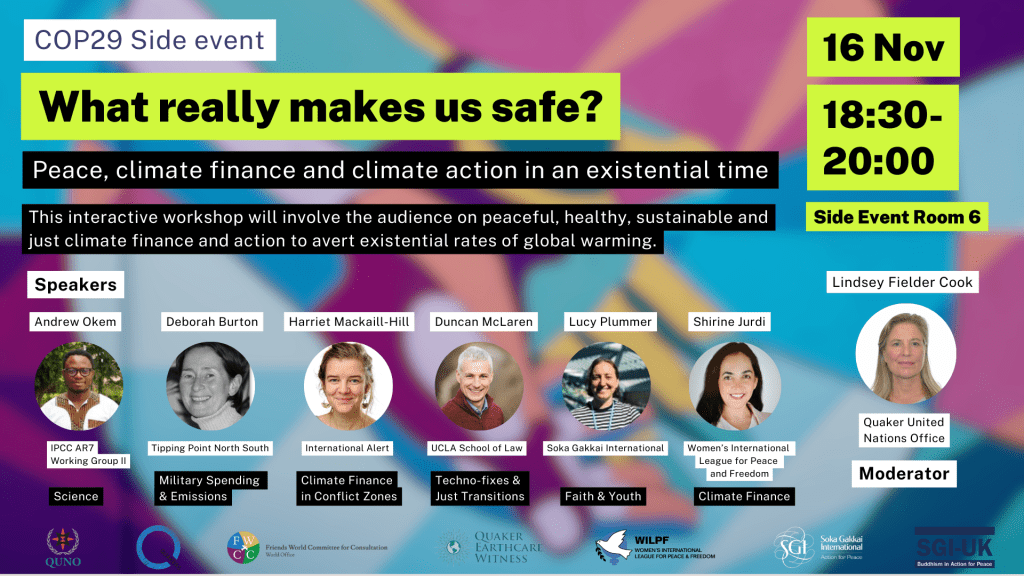
At the COP29 we prepared and translated toolkits for negotiators on the latest climate science, and booklets for grassroots action on ‘what we can do’. We distributed a briefing paper on the risks of geo-engineering reliance on carbon dioxide removal (CDR). We helped author an interfaith statement for the COP and helped plan and facilitate an interfaith Talanoa Dialogue with faith voices from around the world. We coordinated Quaker voices in global civil society demands for the COP Presidency to protect human rights in climate action. We co-hosted with Quakers in Britain and Quaker Earthcare Witness an official COP event titled, What Really Makes us Safe?, and in a COP Press Conference asked the same question before journalists: why do we beg for climate finance to support needed root cause transitions and help people experiencing loss and damage, while trillions are spent on weapons to oppress and kill? Throughout, we met with a diverse group of negotiators to talk through hopes and concerns, as part of our quiet diplomacy efforts here to build communication between countries.
We hold to Quaker testimonies as a clear witness to peace and justice. “Do not be afraid to say what you have found and what you value.” As Quakers, we can bring vision to overcome fear. A vision of transformations which promote clean air, clean water and healthy wildlife, promote public transport, public health and education, promote clean and more equitably owned renewable energy, sustainable and just economic systems, more equitable societies, restorative agriculture and healthy diets. The story of Care for Creation – to walk cheerfully in this world, a witness to love not fear, to regeneration not destruction.
In collaboration with a number of Quaker and Interfaith organizations, QUNO co-hosted a side-event at the COP29 climate conference in Baku, Azerbaijan discussing the theme: “What really makes us safe? Peace, climate finance and climate action in an existential time”. An expert panel involved the audience in a conversation touching on peaceful, healthy, sustainable and just climate finance and action to avert existential rates of global warming
The event was moderated by QUNO’s Interim Deputy Director and Representative for the Human Impacts of Climate Change, Lindsey Fielder Cook. The panel featured an array of speakers from across the globe including the following experts:
Shirine Jurdi, Women’s International League for Peace and Freedom (Lebanon)
Deborah Burton, Tipping Point North South
Andrew Okem, IPCC (Head of Science of the IPCC Working Group II Technical Support Unit)
Lucy Plummer, Soka Gakkai International
Harriet Mackaill-Hill, International Alert
Duncan McLaren, UCLA Law School
The event was co-sponsored by Friends World Committee for Consultation, Quaker Earthcare Witness (QEW), Soka Gakkai International – UK (SGI-UK), Soka Gakkai International Office for UN Affairs, Women’s International League for Peace and Freedom (WILPF), and Quakers in Britain.
It took place on Saturday, November 16, 2024 at 6:30pm local time. A recording of the event was made by the UNFCCC and can be accessed on YouTube here.
QUNO’s Human Impacts of Climate Change programme has published a new briefing paper titled “Carbon Dioxide Removal (CDR): What is Sustainable and Just?”. Written by Dr. Duncan McLaren (UCLA, USA) and Dr. Olaf Corry (University of Leeds, UK), two academic experts on environmental law, international politics and geoengineering, this briefing paper is a key resource for understanding the risks of reliance on CDR.
The paper provides an overview of carbon dioxide removal practices and risks, and evaluates if there are just and sustainable levels for the use of these methods and technologies. Discussing geo-political, ethical and equity consequences to the mitigation choice of CDR, it highlights uncertainties surrounding the prospects of implementing large-scale CDR and the role it could play in threatening biodiversity and human rights. Exploring false narratives and misleading climate modelling portraying large-scale CDR reliance as a ‘techno-fix’, the authors ask what is ‘sustainable and just’, what is unsafe, and highlight approaches which can equitably and effectively transform root causes while avoiding reliance on unsustainable and unjust techno-fixes.
This is a critical issue, one increasing in importance as the costs and assumptions associated with CDR are reflected in climate models and governments lay out long term plans that increasingly rely on CDR approaches as opposed to reduction of root causes. This paper fills a crucial information gap by examining the feasibility, effectiveness, safety, sustainability, legality and ethics of CDR implementation.
This report was supported with grant funding from the European Climate Foundation. The publication and any conclusions contained within are those of the authors and do not necessarily reflect the positions or policies of the European Climate Foundation.
The Friends World Committee on Consultation World Plenary took place in South Africa from August 5-12th this year. As part of the programming and testimony given by Friends globally, QUNO Geneva Interim Deputy Director and Representative for the Human Impacts of Climate Change, Lindsey Fielder Cook, contributed personal reflection by video recording on the theme of ‘care for creation’. Lindsey’s powerful statement provides an overview of QUNO’s work on climate and its ties to deeply rooted Quaker values. Her call to action reflects Friends concerns for intergenerational equity and advocates for solutions that are globally just, addressing the root causes of a climate crisis based on imbalances of money and power.
QUNO Geneva Interim Deputy Director and Representative for the Human Impacts of Climate Change, Lindsey Fielder Cook, recently contributed to two webinars focused on climate, peace, and militarism.
In a conversation hosted by Quaker Earthcare Witness, Lindsey and General Secretary of the American Friends Service Committee (AFSC), Joyce Ajlouny, share their experiences with peace and climate justice.
AFSC and QUNO also described their work in a webinar dedicated to exploring “Climate justice in a militarized world”. Presenters from both organizations shared about ongoing Quaker work and advocacy in North and South America, Africa, the Middle-East and at the UN in Geneva.
 QUAKERS & CLIMATE CHANGE WORLDWIDE