QCEA is concerned that this roadmap on the energy-from-waste communication could undermine the European Union’s laudable attempts to transition to a circular economy. Their response outlines a number of our concerns: overcapacity and lock-ins, waste prevention and eco-design, and energy inefficiency and climate. Read their full feedback here.
Category: International Political Engagement
10 key improvements to get the Circular Economy back on track
Eleven NGOs working on the circular economy, including the Quaker Council for European Affairs, have come together to sign a statement outlining the 10 improvements that need to be made to the European Commission’s waste proposals, to get the Circular Economy package back on track. Read the full document here.

Chapter on Quakers and Climate Change
The Spiritual Dimension of Business Ethics and Sustainability Management examines the spiritual orientations to nature and business in different cultural traditions, including Quakerism. The chapter highlights the concern that the international goal to limit global warming to below 2 °C is becoming increasingly unattainable. In order to achieve this goal, the author, address that the world would would have to reduce its levels of material production and consumption—i.e. in the material standard of living.
To read the chapter, you can access it through this link.

The Time is Ripe for Governments to Strengthen Sustainable and Food-Secure Farming

QUNO’s Food and Sustainability Programme Representative, Susan Bragdon, has recently published a call-to-action paper “The Time is Ripe for Governments to Strengthen Sustainable and Food-Secure Farming”. The paper calls for the international community to mobilise resources for a more proactive role of the public sector in supporting small-scale farmers, their seed systems and the protection of agricultural biodiversity. Furthermore, the paper urges national governments to engage in consultation with small-scale farmers to identify what they require in order to effectively engage in activities to support the conversation and sustainable use of biodiversity and to achieve secure livelihoods.
Read the full paper by clicking here.
Climate Justice and the use of Human Rights Law

In QUNO’s recent publication “Climate Justice and the use of human rights law in reducing greenhouse emissions”, Lindsey Fielder Cook and David Elliot look at how human rights obligations can help support policies, which lead to more successful and just efforts to decrease greenhouse gas (GHG) emissions due to human activities. The publication underlies the relationship between human rights and climate change as conceptualized at the United Nations, and explores how human rights can be used to secure greater emissions reductions while also achieving climate justice.
Read the full report by clicking on the link below.
What climate science tells us (briefly) – QUNO paper

This QUNO paper digests recent findings from climate science into a short, 15 point summary document accessible to a broad audience.
Read the full document below:
QUNO Summary of the Paris Agreement
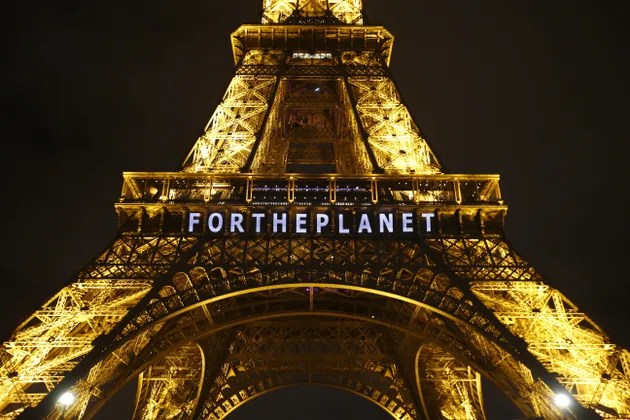
Representative for Climate Change, Lindsey Fielder Cook, reflects on the 2015 Paris Climate Change Agreement.
Over the course of three years leading up to COP21, QUNO engaged in quiet diplomacy at the United Nations Framework Convention on Climate Change (UNFCCC), offering delegates a more ‘human’ space in what could seem at times like an inhuman environment.
The report, available below, offers insight into this process, thoughts on the Agreement itself and a vision for what might lie ahead.
Read the document below:
Quakers – QUNO summary of the Paris Agreement
Photo: Francois Mori/AP
Realising the right to food in an era of climate change

Agriculture is a major contributor to anthropogenic climate change, and in turn climate change threatens the viability of food production around the world. The spread of capital- and technology-intensive ‘industrial’ agriculture in the modern era has been accompanied by an erosion of on-farm genetic diversity, a loss of local knowledge, and the abandonment of traditional farming practices. This undermines our capacity to
adapt to already-changing climatic conditions.
This report highlights the role of small-scale farmers as innovators and custodians of food system diversity, a critical resource in ensuring the realization of the right to food in an era of climate change. Taking an innovation systems perspective, it proposes a new framework for the design of collaborative agricultural research projects and agendas, and notes the need for pro-active policy measures in creating an enabling environment for such partnerships.
Read the full report by following this link:
Moving forward in international negotiations: four innovative examples

This paper presents four examples of multilateral agreements that have involved complex negotiations, some spanning several years, others several decades. The examples draw on international processes in environment, disarmament, human rights and trade.
Read the full paper below:
Moving Forward in International Negotiations_UPDATED_30_July_2014
Increasing trust and effectiveness under the UNFCCC: learning from international monitoring processes

Facilitating trust among Parties is vital to enabling and encouraging States to stabilise their greenhouse gas (GHG) emissions and prevent dangerous levels of climate change.
An effective and positive monitoring system can be an important part of building mutual trust between Parties to an international Convention, increasing confidence that all Members will fulfil their obligations by providing support for implementation while also identifying areas of non-compliance.
Read the paper below:

