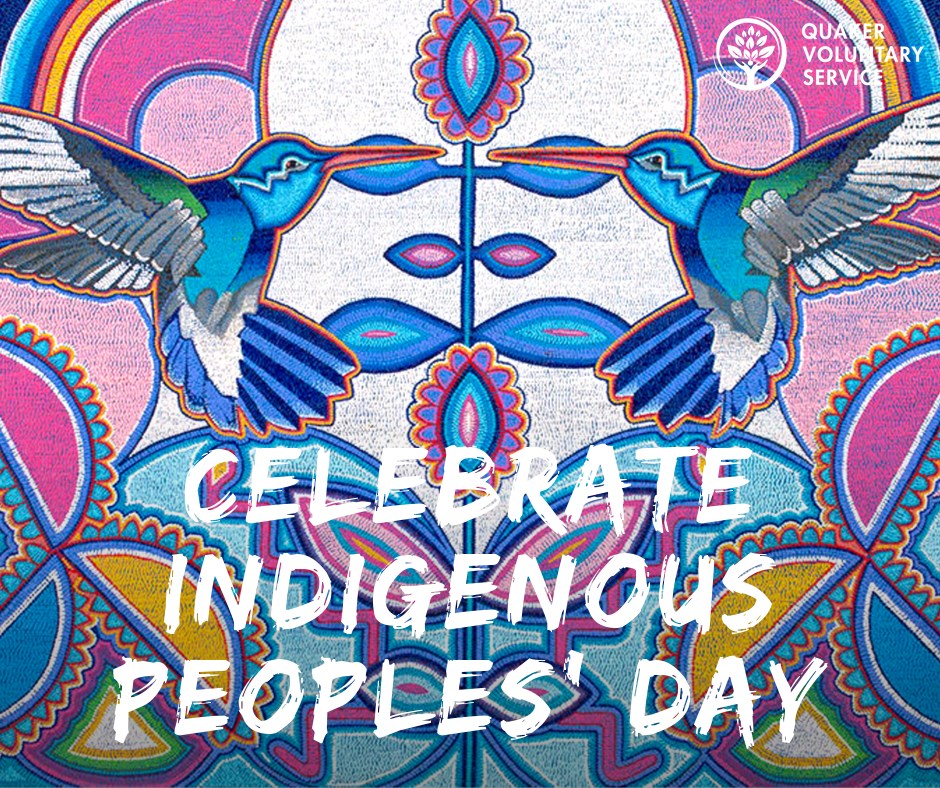
This week an increasing number of US states, cities, and other municipalities celebrated Indigenous Peoples’ Day, a deliberate space to reflect on the history, present, and future of Indigenous peoples in Turtle Island/USA/Canada specifically and worldwide generally. Quaker Voluntary Service (QVS), a Turtle Island/United States based Quaker service organization, shared several resources to help further understand this particular day, including Quaker complicity in Indigenous oppression, and avenues to take action. QVS wrote that “We’re excited to honor and celebrate Indigenous Peoples’ Day! The strength and resilience of Native Peoples who have long stewarded the land we live upon is seen and lauded. There is much work to be done in addressing historical and modern harm to our Indigenous siblings, let us collectively move and work towards that justice!” As indigenous peoples are at the forefront of being affected by climate change while also being leaders in the movement to save our planet, the following resources can be helpful in reflecting on Quakers’ specific relationship with Indigenous peoples and the ways we can support and be in solidarity with Indigenous communities.
Friends Journal QuakerSpeak video on seeking Right Relationship with Native Americans can be watched here and this article discusses Quaker Boarding Schools.
Use this tool to navigate a map to find out whose land you are on.
This article is on the history of Indigenous Peoples’ Day, and 8 Indigenous rights groups to support and learn about.
The art featured in this post was created by artist Blue Rain, of the Muscogee / Creek Nation, whose land the Atlanta QVS community is on.






 QUAKERS & CLIMATE CHANGE WORLDWIDE